The Staging Industry Built a Billion-Dollar Business on the Idea That Your Furniture Is the Problem
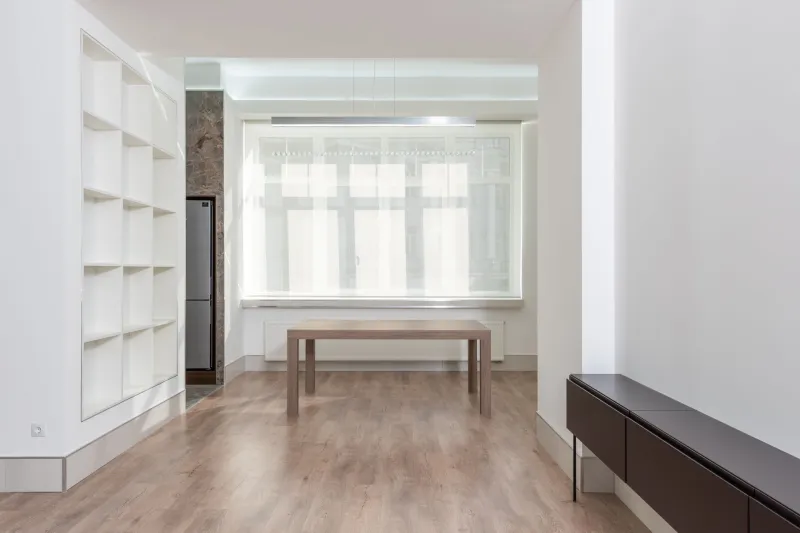
At some point in the last thirty years, selling a house got a costume change. What used to mean cleaning up, fixing what was broken, and letting buyers walk through became something closer to a theatrical production. Today, the home staging industry generates over two billion dollars annually in the United States, and the advice to stage your home before listing it is treated less like a suggestion and more like common sense.
The belief is straightforward: a professionally staged home — decluttered, neutralized, and dressed with carefully chosen furniture and accessories — sells faster and for more money than a home that looks like someone actually lives there. It's repeated so often, by so many agents and home improvement shows, that most sellers never question it.
But the actual evidence behind staging's financial impact is considerably murkier than the industry lets on.
Where Staging Came From
The modern concept of home staging is generally credited to Barb Schwarz, a Seattle-area real estate agent who coined the term in the early 1970s and later built a certification and training empire around it. The core idea was sensible enough at the time: help sellers see their home through a buyer's eyes, reduce clutter, and make spaces feel more open and welcoming.
What started as practical advice — move the oversized sectional, clear the kitchen counters, maybe repaint that accent wall in burgundy — gradually evolved into a full-service industry with professional stagers, rental furniture companies, and a specific aesthetic language that became almost universal. Clean lines. Neutral palettes. A bowl of lemons on the counter. A throw blanket arranged on the couch in a way no human has ever naturally placed a throw blanket.
The industry grew alongside HGTV's rise in the late 1990s and 2000s, which turned home transformation into entertainment and made the staged look feel like the standard against which all homes should be measured. By the time staging became a line item in seller budgets, it had already been normalized by a decade of television.
What the Research Actually Shows
Here's where it gets complicated. Studies on staging's impact on sale price are genuinely mixed, and the ones that show positive results often have significant methodological limitations.
A frequently cited statistic — that staged homes sell for 5 to 20 percent more than unstaged ones — comes largely from surveys of real estate agents, not controlled studies comparing matched properties. Agents who believe in staging report that staging works. That's not independent evidence; that's confirmation bias with a press release.
More rigorous analyses have found that staging's biggest demonstrable effect is on time on market, not final sale price. Staged homes do tend to sell faster. Whether that speed translates to a higher price depends heavily on local market conditions, price point, and whether the home was competitively priced to begin with.
A 2021 study from the National Association of Realtors found that while a majority of buyer's agents believed staging helped buyers visualize a home, only about a quarter said it consistently increased the dollar value buyers were willing to offer. That's a meaningful gap between perceived value and actual financial impact.
The Neutral Aesthetic Problem
The staging industry's signature move is the "neutral aesthetic" — the idea that removing personal items, bold colors, and distinctive furniture helps buyers project themselves into the space. The logic is intuitive: a blank canvas is easier to imagine painting than one with someone else's artwork already on it.
But consumer psychology research complicates this. Studies on how people form emotional connections with spaces suggest that some degree of warmth and personality actually helps buyers bond with a home. Completely depersonalized rooms can feel cold, showroom-like, and harder to emotionally inhabit — which is precisely the opposite of what sellers want buyers to feel.
There's also a growing body of research on how people respond to authenticity in commercial environments. Spaces that feel lived-in and genuine tend to generate more positive emotional responses than spaces that feel constructed. A home that looks like nobody has ever made breakfast there may photograph beautifully but feel oddly sterile in person.
This doesn't mean clutter helps. It doesn't. But the spectrum between "cluttered and personal" and "staged to within an inch of its life" is wider than the industry tends to acknowledge.
Why the Myth Has Staying Power
Staging persists as conventional wisdom for a few overlapping reasons. Agents recommend it partly because they genuinely believe it helps, and partly because recommending it protects them — if a home sells slowly, the agent can point to a failure to stage as a contributing factor. It's a useful hedge.
The visual economy of real estate also plays a role. In a world where listings live or die by their photography, staged homes do photograph better. That's real. Whether better photography translates to a higher closing price is a separate question, but in a market where most buyers start online, first impressions matter in ways they didn't thirty years ago.
And the industry itself — stagers, rental furniture companies, training programs — has a clear financial interest in keeping the belief alive. That's not a conspiracy; it's just how industries work.
What Sellers Should Actually Think About
None of this means staging is worthless. Decluttering genuinely helps. Fixing obvious cosmetic issues matters. Making sure a home is clean and well-lit for photography is important. These are real and low-cost improvements with measurable impact.
What sellers should be skeptical of is the expensive end of the staging spectrum — full furniture rentals, professional stylists, and the pressure to completely erase any trace of the people who actually live there. The evidence that this level of investment pays off in final sale price is weak, and the costs can run into thousands of dollars.
The home you're selling isn't a problem to be solved. It's a home. And buyers, it turns out, are pretty good at recognizing one.