A Crack in the Foundation Looks Scary. What It Actually Means Is More Complicated.
There are a few phrases in a home inspection report that can stop a real estate transaction cold. "Foundation crack" is near the top of that list. The moment a buyer reads those words, the mental imagery shifts immediately to a house slowly sinking into the earth, walls separating, catastrophic structural failure looming just below the surface.
In reality, the vast majority of foundation cracks are about as threatening as a scuff on a baseboard. But because most people have no framework for evaluating what they're looking at, fear fills the gap — and deals die, prices crater, or buyers walk away from homes that were never actually in danger.
Concrete Cracks. That's What Concrete Does.
To understand why foundation cracks are so routinely misread, you have to start with the material itself. Concrete is strong under compression, but it has almost no tensile strength — meaning it resists being pushed together but cracks relatively easily when pulled apart or subjected to stress from different directions.
Foundations crack because the soil beneath them shifts. Soil expands when it absorbs moisture and contracts when it dries out. In most parts of the United States, that cycle happens seasonally and sometimes weekly depending on rainfall. A foundation that has never cracked after 20 or 30 years of sitting on soil that's constantly moving is actually the unusual case.
This is something structural engineers understand instinctively and most homebuyers don't: cracking is a normal response to normal forces. The question isn't whether a crack exists — it's what kind of crack it is, where it is, and what it's doing over time.
The Difference Between Cosmetic and Structural
Not all foundation cracks are created equal, and the distinctions matter enormously.
Hairline cracks are thin, surface-level fractures that typically form as concrete cures and dries after a pour. They're almost universally cosmetic. They don't indicate movement, they don't affect structural integrity, and they're present in the vast majority of concrete foundations in the country. If your inspector flags a hairline crack, that's responsible documentation — not a red flag.
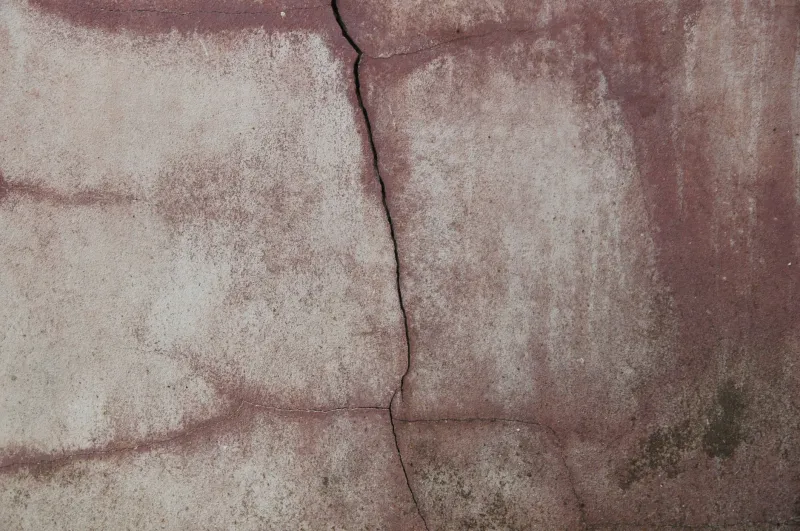
Vertical cracks are the next most common type. They usually form as a foundation settles after construction, which virtually every foundation does to some degree. A vertical crack that's uniform in width from top to bottom and shows no signs of movement or water infiltration is typically a minor concern. Many can be sealed with hydraulic cement or epoxy injection at modest cost.
Horizontal cracks are a genuinely different story. These form when lateral soil pressure — the weight of earth pushing against a foundation wall from the outside — exceeds what the wall can resist. Horizontal cracking, particularly in block or brick foundations, can indicate that the wall is beginning to bow inward. This is the category that warrants real attention and a structural engineering assessment.
Diagonal or stair-step cracks fall somewhere in between. In poured concrete, diagonal cracks often appear at corners and can indicate differential settlement — meaning one part of the foundation is moving at a different rate than another. In block foundations, stair-step cracks following the mortar joints can signal the same thing. Whether this is serious depends on the extent of the movement and how stable it appears to be.
Why the Fear Response Is So Disproportionate
Given that most foundation cracks are benign, why do they cause such outsized reactions during real estate transactions?
Part of the answer is visibility. A foundation crack is something a buyer can see with their own eyes, photograph, and worry about. It feels concrete — literally and figuratively. Unlike a roof that might fail in five years or a water heater approaching the end of its lifespan, a foundation crack is tangible evidence of imperfection in the part of a structure that's supposed to be its most reliable element.
There's also the language problem. Home inspectors are trained to document what they observe, not to offer structural engineering opinions — and for good reason. But when an inspector writes "foundation crack observed, recommend evaluation by a qualified structural engineer," that language reads as alarming to most buyers even when it's entirely routine documentation. The recommendation for further evaluation sounds like confirmation of a serious problem rather than standard professional caution.
Media and renovation culture haven't helped. Home improvement television has a long history of treating foundation issues as dramatic plot points, often depicting worst-case scenarios that represent a small fraction of actual cases. When that's your primary frame of reference, a hairline crack in a basement wall feels like the opening scene of a disaster.
What Actually Warrants Concern
The signs that a foundation problem is genuinely serious go beyond the crack itself. Active water intrusion through a crack — water that's currently moving through the wall, not old staining — indicates that hydrostatic pressure is a live issue. Cracks that are wider at one end than the other suggest ongoing differential movement rather than settled, stable damage. Doors and windows that have recently started sticking, floors that have developed a noticeable slope, or walls that are visibly separating from ceilings are all signs that something structural may be actively changing.
If any of these conditions are present, a structural engineer — not a foundation repair contractor — is the right first call. Contractors have an obvious financial interest in recommending repairs. Engineers charge for an assessment and have no stake in the outcome.
For the majority of foundation cracks that don't show these warning signs, a qualified inspector's report and a reasonable repair estimate are all that's needed to put the issue in proper perspective.
The Real Cost of Overreaction
Buyers who walk away from solid homes over routine foundation cracks are making decisions based on fear rather than information. Sellers who drop their prices dramatically in response to inspection findings they don't understand are often giving away money unnecessarily.
A crack that costs $500 to seal properly doesn't justify a $20,000 price reduction. But that kind of disproportionate negotiation happens regularly in real estate transactions where neither party has bothered to get an actual engineering opinion.
The foundation of a house is meant to last. Most of them do. A crack in the concrete is often just the evidence that it's been doing its job for a long time.
The takeaway: Foundation cracks are common, and most are cosmetic or easily repaired. The type, orientation, and behavior of a crack matter far more than its mere existence. Before making any major decision based on an inspection finding, get an assessment from a structural engineer — not a repair contractor, and not a fear response.