That Energy Efficiency Estimate on Your Home Disclosure Is Based on a Family That Doesn't Exist
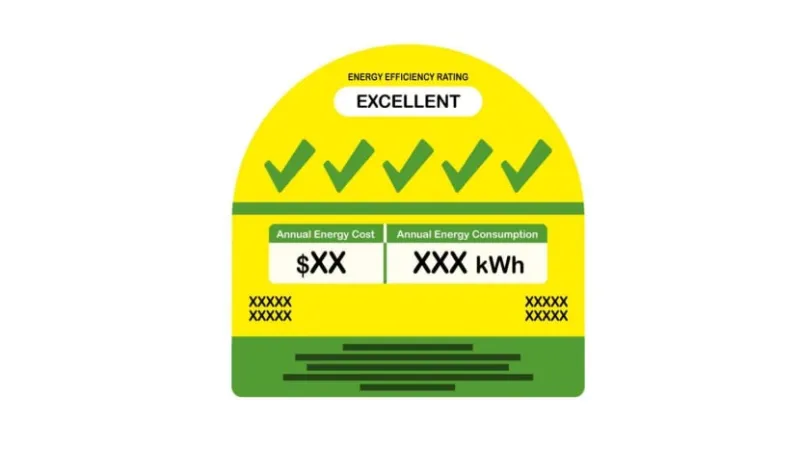
Photo: energy efficiency label home appliance utility bills, via onecms-res.cloudinary.com
Somewhere on the disclosure packet or listing details for a home you're considering, there's probably a number. It might appear on an Energy Guide label on the water heater. It might show up as an estimated annual utility cost on the property description. It might be part of an energy efficiency rating score attached to a newer build.
It looks authoritative. It looks specific. It looks like someone measured something.
They did measure something. Just not your life.
Where These Numbers Come From
Energy efficiency ratings and estimated utility costs in residential real estate are based on standardized modeling. The most common framework in the U.S. is developed by the Department of Energy and used to calculate the EnergyGuide labels you see on appliances and in some home disclosures. Related systems like HERS (Home Energy Rating System) scores are used in new construction to compare a home's projected energy use against a theoretical baseline.
The operative word in all of this is projected. These numbers are not readings from actual usage. They're outputs from a model that makes assumptions—a lot of assumptions—about how a home will be used.
That model assumes things like: a specific number of occupants (often based on square footage), a fixed thermostat schedule, standardized hot water usage, a set number of dishwasher and laundry cycles per week, and average behavior patterns drawn from large household surveys. The climate data used is often based on long-term regional averages, not the specific microclimate of the neighborhood where the house sits.
In other words, the number is calculated for a household that is statistically average in almost every way. The odds that your household matches that profile closely enough for the estimate to be meaningful are pretty low.
Why the Gap Between Estimate and Reality Can Be Enormous
Consider a few variables that energy efficiency models typically don't capture:
How you actually set your thermostat. The model might assume 68°F in winter and 76°F in summer. If you keep your home at 72°F year-round—or if you work from home and run the heat all day while the model assumes an empty house during work hours—your actual energy use can diverge significantly from the projection.
Your regional utility rates. An efficiency score tells you how much energy a home is expected to use. It doesn't tell you what that energy will cost you. Electricity rates vary dramatically across the U.S.—from under 10 cents per kilowatt-hour in parts of the South to over 30 cents in Hawaii and parts of New England. A home with a great efficiency rating in a high-rate state can still cost more to operate than a less-efficient home in a low-rate state.
The actual age and condition of systems. A HERS score on a new build is based on the equipment installed at construction. A disclosure estimate on a resale home may be based on outdated data or assumptions about equipment that's since been replaced—or that's degraded significantly since it was last evaluated.
Occupancy and lifestyle. A single remote worker who cooks every meal at home uses energy very differently than a couple who travels frequently and eats out most nights. Neither of those profiles maps onto the standardized occupant model, and both will see real utility bills that diverge from the estimate.
Local weather extremes. Climate models used in efficiency ratings are built on historical averages. If your area has seen increasingly intense summers or colder winters in recent years—which much of the U.S. has—those averages understate what you'll actually spend on heating and cooling.
Why the Ratings Persist Anyway
If efficiency estimates are this imprecise, why are they everywhere?
Partly because comparison is genuinely useful, even when the absolute numbers are off. A HERS score of 55 on one home versus 90 on another tells you something meaningful about relative efficiency, even if neither score accurately predicts your specific utility bill. For new construction buyers comparing similar homes, that relative comparison has real value.
Partly, though, it's because a specific-looking number is a powerful sales tool. Estimated annual energy cost: $1,240 sounds like information. It signals that someone did the math. Buyers tend to accept it at face value because questioning it would require understanding how it was calculated—which is not a simple process.
And partly it's because disclosure requirements vary by state. In some states, sellers are required to provide energy-related information. In others, they're not. What gets disclosed, and how it's framed, is as much a product of legal requirements and marketing convention as it is of genuine transparency.
What to Ask Instead
If you're serious about understanding what a home will actually cost to operate, skip the efficiency rating and go straight to the source.
- Request actual utility bills. Ask the seller or their agent for twelve months of electric and gas bills. Real usage data from the home's actual occupants is far more informative than any model-based estimate—with the caveat that the previous household's usage patterns may differ significantly from yours.
- Ask about the age and efficiency rating of specific systems. When was the HVAC installed? What's the SEER rating of the air conditioner? Is the water heater a standard tank or a heat pump model? These specifics matter more than a composite score.
- Check local utility rates yourself. Your county or city utility provider publishes current rate schedules. Use those to run your own rough math on the energy a home is likely to consume.
- Talk to a home energy auditor. For a few hundred dollars, a certified auditor can walk through the home and give you a real-world assessment of insulation, air sealing, and system efficiency—information that's far more actionable than a disclosure form number.
The Takeaway
Energy efficiency ratings are built on assumptions that may have nothing to do with how you live, where utility rates actually are, or what local weather patterns look like in a warming climate. The number on the disclosure form isn't wrong, exactly—it's just answering a question about a hypothetical household rather than yours. Before you factor energy costs into your buying decision, dig into actual bills and real system specs. The estimate is a starting point, not a promise.