How One Stone Convinced an Entire Country It Defined Kitchen Quality
The Stone That Took Over America's Kitchens
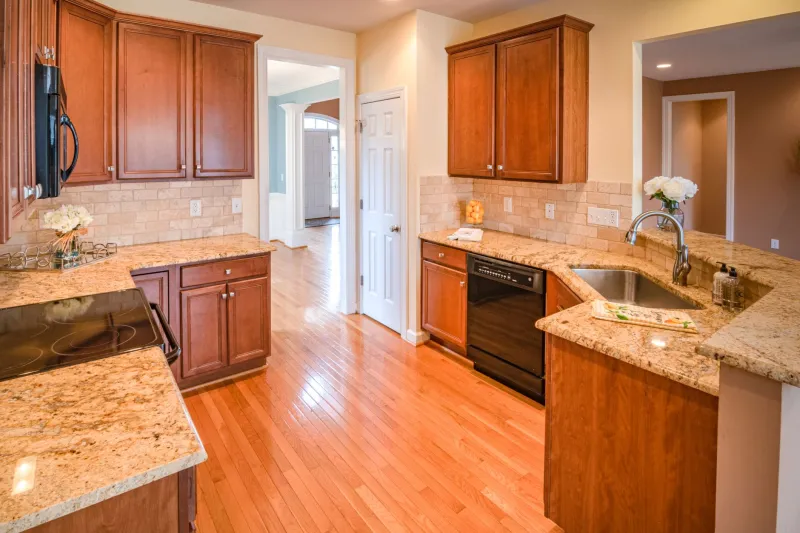
Walk through any American home built or renovated in the last thirty years, and you'll likely encounter the same status symbol: granite countertops. Real estate agents mention them in listings. Home improvement shows treat them as renovation essentials. Appraisers factor them into home values. For an entire generation of homeowners, granite has functioned as shorthand for "quality kitchen renovation."
But granite's total dominance of American kitchen design isn't a natural result of it being superior to other materials. It's the product of one of the most successful coordinated marketing campaigns in home improvement history — an effort that transformed a commodity stone into a perceived luxury standard and reshaped how Americans think about kitchen value.
The Campaign That Changed Kitchen Culture
In the early 1980s, granite was primarily used for monuments and commercial buildings. Most American homeowners had never considered it for kitchen countertops. Then the Natural Stone Institute (formerly the Marble Institute of America) launched an ambitious campaign to expand granite's market beyond tombstones and office lobbies.
 Photo: Natural Stone Institute, via www.tmzc.org.pl
The strategy was brilliant in its simplicity: position granite as the premium choice for discerning homeowners who wanted the best. Industry marketers didn't just promote granite's practical benefits — they created an entire narrative around sophistication, permanence, and luxury that appealed to homeowners' aspirations.
The campaign coincided perfectly with the 1980s and 1990s kitchen renovation boom, when baby boomers were entering their peak earning years and investing heavily in home improvements. Granite marketers successfully inserted their product into the cultural conversation about what constituted a "gourmet kitchen."
Creating Demand Through Strategic Partnerships
The granite industry's marketing success relied heavily on partnerships with influential players in the home improvement ecosystem. They worked with kitchen designers, home improvement television shows, and real estate professionals to establish granite as the expected choice for upscale renovations.
Home improvement magazines began featuring granite prominently in kitchen makeover articles. Television shows treating granite countertops as obvious upgrades rather than one option among many. Real estate agents started using granite as a selling point that could justify higher asking prices.
These partnerships created a feedback loop: as granite appeared more frequently in media and marketing materials, it became associated with quality and sophistication. As that association strengthened, more professionals recommended it to their clients, further cementing its premium status.
The Price Premium That Justified Itself
One of the most clever aspects of granite's marketing positioning was how it used price as a selling tool rather than an obstacle. By establishing granite as expensive, marketers simultaneously positioned it as exclusive and desirable. The high cost became proof of quality rather than a barrier to purchase.
This pricing strategy worked because it aligned with American consumer psychology around home improvements. Homeowners often assume that more expensive materials will add more value to their homes, even when that's not necessarily true. Granite's price premium made it feel like a smart investment rather than an expensive indulgence.
The industry also benefited from the fact that granite installations are highly visible and permanent. Unlike appliances that can be easily replaced, granite countertops signal to everyone who enters the kitchen that the homeowner invested in "quality" materials.
What the Marketing Campaign Didn't Mention
While granite does have genuine practical benefits — it's durable, heat-resistant, and relatively easy to maintain — it's not objectively superior to every other countertop material. Quartz offers similar durability with less maintenance. Butcher block provides warmth and character. Concrete allows for custom designs. Stainless steel offers professional functionality.
But granite's marketing campaign was so successful that many homeowners stopped considering alternatives. The industry created a situation where choosing anything other than granite felt like settling for second-best, regardless of individual needs, preferences, or budgets.
The Billion-Dollar Impact on Home Renovation
The granite campaign's success can be measured in the billions of dollars Americans have spent on granite countertops over the past three decades. It influenced not just individual purchasing decisions, but entire renovation budgets as homeowners allocated disproportionate amounts of their kitchen improvement money to countertops.
This spending pattern had ripple effects throughout the home improvement industry. Kitchen designers began planning renovations around granite's requirements. Cabinetry had to be reinforced to support granite's weight. Installation became a specialized trade requiring specific tools and expertise.
The granite standard also affected home values and buyer expectations. Properties with granite countertops could command higher prices, while homes with other materials were often seen as needing updates — even if the existing countertops were perfectly functional.
The Slow Shift in Kitchen Trends
In recent years, younger homeowners and design professionals have begun questioning granite's automatic premium status. Design trends have moved toward cleaner, simpler aesthetics that often favor materials like quartz or even laminate. Environmental concerns have made some buyers more interested in sustainable options.
But granite's cultural position remains remarkably strong. Real estate listings still highlight granite countertops as premium features. Many homeowners still see granite as the safe, value-adding choice for kitchen renovations.
The Lesson in Marketing-Driven Home Improvement
The granite story illustrates how industry marketing can reshape consumer expectations and spending patterns in ways that persist for decades. What started as a campaign to expand one material's market share became a cultural standard that influenced how Americans define kitchen quality.
The next time you're planning a kitchen renovation and automatically assume granite countertops are the "right" choice, remember that this assumption was carefully cultivated by an industry that successfully convinced an entire country that one specific stone was synonymous with kitchen excellence. Granite might be perfect for your needs — but that decision should be based on your actual requirements, not the lingering influence of a marketing campaign that embedded itself into American home improvement culture.