Property Taxes Seem Simple Until You Actually Look at How They Work
Photo: Dennis G. Jarvis, CC BY-SA 2.0, via Wikimedia Commons
Property taxes are one of those things most homeowners feel like they understand. You own a home worth a certain amount. The government charges you a percentage of that value every year. The check goes to fund schools and roads and local services. Simple enough.
Except almost none of that description is quite accurate — and the gap between the simple version and the real version quietly costs some homeowners thousands of dollars a year while benefiting others in ways they never asked for or even noticed.
The Number on Your Bill Is Not Your Home's Value
Let's start with the most fundamental misconception. Your property tax bill is not calculated based on your home's market value — the price it would fetch if you listed it today. It's based on your home's assessed value, which is a number generated by your local assessor's office using its own methodology, on its own schedule.
In many jurisdictions, assessed value is set as a fixed percentage of market value — sometimes 100%, sometimes 80%, sometimes as low as 10% in certain states. In others, it's calculated using a formula that hasn't been updated in years. In still others, the assessed value is essentially a historical artifact that gets adjusted only when a property changes hands or a reassessment cycle rolls around.
The result is that your tax bill and your home's actual value can diverge significantly — sometimes in your favor, sometimes not.
Why Two Identical Houses Pay Different Taxes
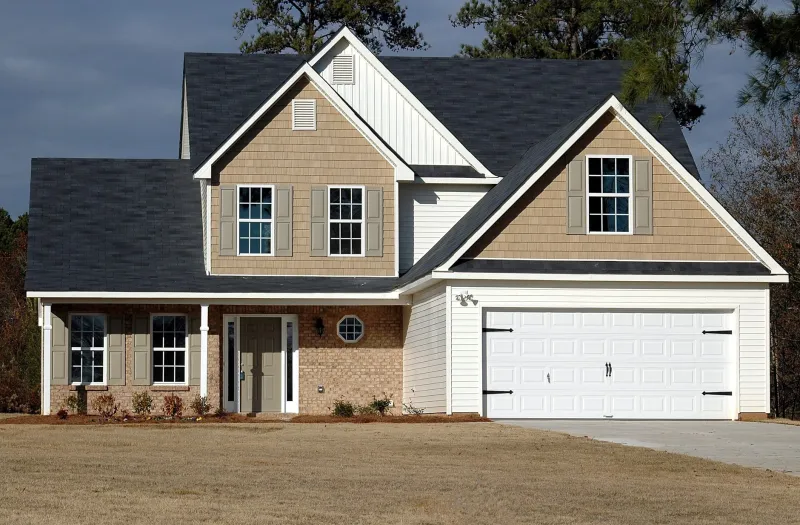
Here's where it gets genuinely strange. Two houses on the same block, built in the same year, with the same floor plan and roughly the same condition, can carry dramatically different property tax bills. This isn't a glitch. It's a feature of how the system was designed.
In states with assessment caps — California's Proposition 13 being the most famous example — a homeowner's assessed value can only increase by a small percentage each year, regardless of how much the market moves. Someone who bought their home in 1995 pays taxes on a value anchored to 1995 prices, adjusted modestly over time. Their neighbor who bought the same style of house in 2022 pays taxes on a current-market assessed value that might be four or five times higher.
This isn't unique to California. Many states have similar caps or phase-in provisions designed to protect long-term residents from being taxed out of their homes during hot markets. The intention is reasonable. The effect is that new buyers often subsidize the tax burden of their longer-tenured neighbors without anyone explaining this dynamic at the closing table.
Exemptions You Might Not Know You Qualify For
Layered on top of assessed values are exemptions — reductions in taxable value available to qualifying homeowners. The homestead exemption is the most common: if your primary residence is the property in question, many states reduce the assessed value before the tax rate is applied. Some states offer additional exemptions for seniors, veterans, people with disabilities, or agricultural landowners.
These exemptions can be substantial. A homestead exemption might remove $25,000 or $50,000 from your taxable assessed value, meaningfully reducing your annual bill. But in most places, exemptions aren't automatic. You have to apply for them. And nobody at the closing table is required to remind you.
A significant number of homeowners who qualify for property tax exemptions simply never file for them — not because they're ineligible, but because they didn't know the exemption existed or assumed it was applied automatically. That's money left on the table every single year.
The Levy Rate Is Set Locally, and It Changes
Even if you fully understand your assessed value and your exemptions, there's still the matter of the tax rate itself — and this is where the myth of a simple, consistent system really breaks down.
Property tax rates are set by local taxing authorities: your county, your municipality, your school district, sometimes your library district or fire district or special assessment zone. Each of these entities sets its own levy, and those levies can change annually based on local budget needs and voter-approved measures.
This means your property tax bill can increase even in a year when your home's assessed value doesn't change — because one of your local taxing bodies raised its rate. It can also decrease if a bond measure expires or a levy is reduced. The rate you were quoted during the home-buying process is a snapshot, not a guarantee.
Why the Myth of Simplicity Persists
Given all of this complexity, why do most homeowners walk around believing property taxes are a straightforward percentage of home value?
Partly because the closing process buries the details. Buyers are handed a disclosure that includes an estimated annual tax figure, and most treat it as fixed. Partly because the system varies so much by state and county that there's no single national narrative to correct — the myth fills the vacuum that complexity creates.
And partly because the system, complicated as it is, tends to work out reasonably well for most people most of the time — at least until it doesn't. The homeowner who gets reassessed after a renovation, the new buyer who discovers their tax bill is double their neighbor's for the same house, the retiree who didn't know they qualified for a senior freeze — these are the moments when the gap between the common belief and the real story becomes impossible to ignore.
The Practical Takeaway
If you own a home or are planning to buy one, a few things are worth doing that most buyers skip entirely: request the property's full tax history before closing, not just the current year's bill. Check your state and county for available exemptions and apply for every one you qualify for. Find out when your jurisdiction conducts reassessments and what triggers an off-cycle review. And if your assessed value seems out of line with comparable properties, know that you have the right to appeal it — a process that succeeds more often than most homeowners realize.
Property taxes aren't simple. They never really were. The belief that they are is just one more thing the real estate process never got around to correcting.