Your Free Real Estate Agent Was Never Actually Free
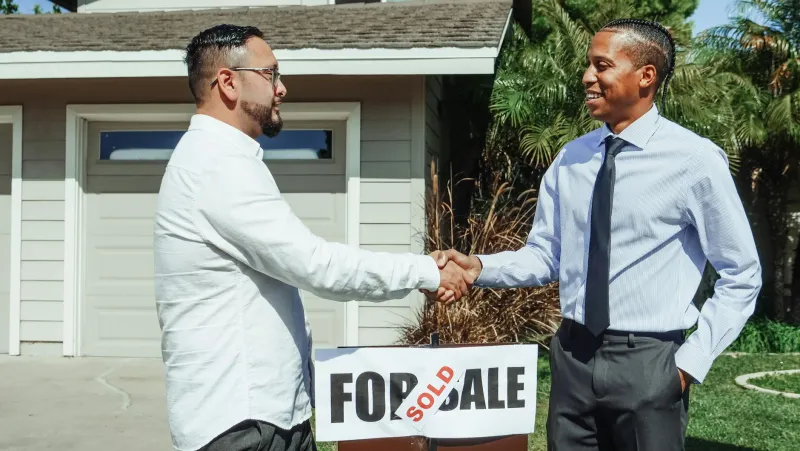
If you've ever bought a home, you probably felt grateful that your real estate agent didn't charge you directly. While sellers paid hefty commissions to both agents, your representation seemed to come at no cost. That comforting belief just got turned upside down by recent legal settlements that revealed what industry insiders always knew: there's no such thing as a free agent.
The Great Commission Shell Game
For over a century, American real estate operated on a simple-sounding premise: sellers pay a commission (typically 5-6% of the sale price) that gets split between the listing agent and the buyer's agent. Buyers walked away thinking they got professional representation without paying a dime.
This arrangement wasn't an accident of market forces. It was a carefully constructed system that made the buyer's side of the transaction appear cost-free while ensuring agents got paid regardless of who they actually represented.
Here's what really happened: sellers built the commission cost into their asking price. When you offered $400,000 for a house, roughly $24,000 of that offer was earmarked for real estate commissions. You weren't avoiding the fee – you were paying it through a higher purchase price.
Why Everyone Stayed Quiet About This
The industry had strong incentives to maintain this illusion. Buyers who believed they were getting free representation were more likely to work with agents and less likely to negotiate commission rates. Sellers, meanwhile, saw the commission as a necessary cost of marketing their home, not as a fee they were collecting from buyers and passing along to agents.
Buyer's agents particularly benefited from this arrangement. They could position themselves as advocates working solely in their client's interest, even though their paychecks ultimately came from the opposing party in the negotiation. This created what economists call a "principal-agent problem" – your agent's financial incentives weren't perfectly aligned with your interests.
The system also discouraged price competition among agents. Since commission rates were effectively set by listing agents and paid through sale proceeds, buyer's agents had little reason to compete on price. Most charged the standard rate because that's what the system supported.
The Conflict Hidden in Plain Sight
Consider the inherent contradiction: your agent was supposed to negotiate the lowest possible price for you, but their commission increased when you paid more for the house. A buyer's agent earning 3% commission made $12,000 on a $400,000 sale but $15,000 on a $500,000 sale.
Most agents handled this conflict professionally, but the structural incentive remained. Some agents steered buyers toward higher-priced properties or discouraged aggressive negotiation tactics that might reduce their commission.
The arrangement also made it nearly impossible for innovative agents to offer lower-cost services. A buyer's agent who wanted to charge a flat fee or reduced commission couldn't easily opt out of the traditional system, since their payment came through the seller's agent at closing.
How Recent Changes Exposed the Truth
Legal challenges in 2023 and 2024 forced the real estate industry to acknowledge what consumer advocates had argued for decades: the traditional commission structure created anti-competitive practices that inflated costs for buyers.
Major settlements with the National Association of Realtors and large brokerages now require clearer disclosure of how agents get paid. More importantly, they're pushing toward a system where buyers might negotiate and pay their agent's commission directly, rather than having it built into the home price.
 Photo: National Association of Realtors, via gomagcdn.ro
These changes are revealing the true cost of buyer representation – and forcing agents to justify their fees in ways they never had to before.
What This Means for Future Buyers
As the industry transitions away from the traditional commission structure, buyers are gaining more control over how much they pay for representation and what services they receive. Some agents are offering unbundled services, flat fees, or hourly rates instead of percentage-based commissions.
This shift requires buyers to think more actively about the value their agent provides. Instead of assuming representation is "free," buyers need to evaluate whether full-service representation is worth 2-3% of their home's purchase price, or whether they'd prefer to pay less for limited services.
The change also creates opportunities for new types of real estate services. Technology companies and discount brokerages are already offering alternative models that separate showing homes, writing offers, and handling negotiations into distinct, separately-priced services.
The End of the Free Lunch
The traditional real estate commission structure survived for so long because it hid costs and minimized price competition. Buyers felt like they were getting something for nothing, while sellers accepted commission costs as unavoidable.
Now that the curtain has been pulled back, the industry is being forced to compete on value rather than maintaining the illusion of free services. That's ultimately good news for consumers, even if it means confronting the reality that professional real estate services were never actually free.
The next time you work with a buyer's agent, remember: you're paying for their services one way or another. The only question is whether you're doing it transparently or through the hidden markup in your home's purchase price.