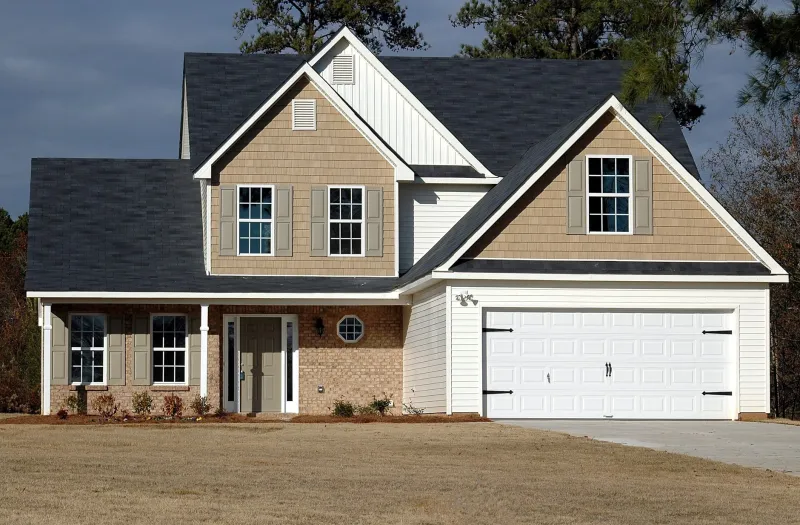
American Homes Keep Growing. The Families Inside Them Keep Shrinking.
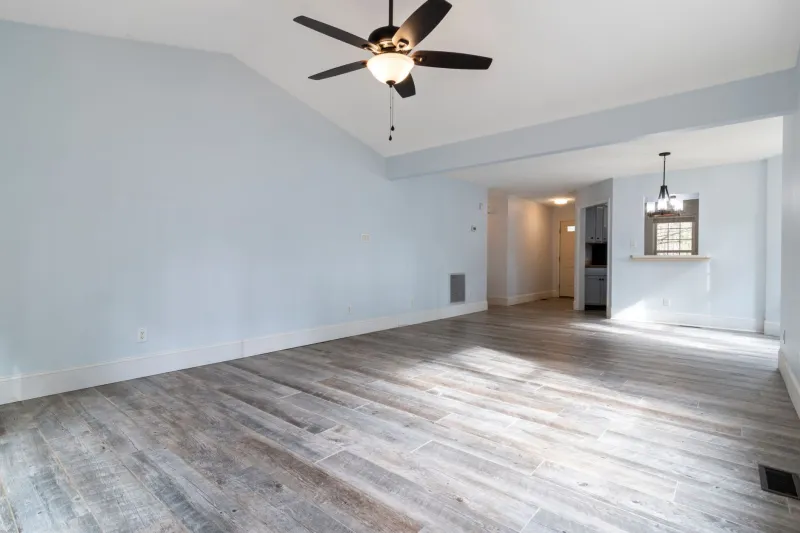
In 1950, the average newly built American home was around 983 square feet. The average household living in it had about 3.4 people.
Today, the average new single-family home in the US is just over 2,300 square feet. The average household has 2.5 people.
That means we're building roughly twice as much house per family as we did seventy years ago, for families that are measurably smaller. And almost nobody questions it — because the idea that more space equals a better life has been sold to us so effectively that challenging it still feels slightly un-American.
How We Got Here
The postwar housing boom set the original template. Returning veterans needed housing fast, and developers like William Levitt delivered it efficiently — modest, functional homes in the 800-to-1,200 square foot range, built quickly on cheap land outside major cities.
But as incomes rose through the 1960s and '70s, square footage became a status signal. A bigger house meant you'd made it. Builders discovered that adding square footage was one of the easiest ways to justify higher prices and wider margins, since land and labor scaled more predictably than features. The mortgage system, which calculated borrowing capacity based on income rather than need, meant that buyers were often approved for more than they required — and were encouraged to use all of it.
By the 1980s and '90s, the McMansion era was in full swing. Great rooms replaced living rooms. Master suites became the size of entire apartments. Three-car garages arrived in neighborhoods where most families owned two cars. The square footage race wasn't driven by genuine demand for space — it was driven by the construction industry's financial incentive to build larger and the cultural expectation that every generation should live bigger than the last.
The Demographic Math That Doesn't Add Up
Here's what makes the trend genuinely strange: the demographic forces pushing household size down were visible and well-documented the entire time the houses were getting bigger.
Americans are marrying later. Having fewer children. Divorcing more. Living longer as single-person households after children leave or partners pass away. The multigenerational household — which is actually the global norm — has remained a minority arrangement in the US despite occasional predictions of its revival.
The result is a significant portion of American homeowners living in homes with rooms that are rarely or never used. The formal dining room that hosts dinner twice a year. The guest bedroom occupied a few weekends annually. The bonus room that became a storage space. These aren't hypothetical — home organization has become a multi-billion-dollar industry partly because Americans have more space than they know what to do with and fill it with things they don't need.
The Costs Nobody Factors In at Purchase
The financial case for buying as much house as you can afford assumes that square footage translates into proportional value. But the costs of maintaining, heating, cooling, and eventually selling a large home don't scale the same way the purchase price does.
Heating and cooling a 2,500-square-foot home costs meaningfully more than a 1,400-square-foot home in the same climate — and as energy prices become more volatile, that gap becomes harder to predict. Property taxes in most states are tied to assessed value, which generally tracks with size, meaning larger homes carry a recurring cost premium that never goes away. Maintenance — roof replacement, exterior painting, HVAC systems, flooring — covers more surface area in a larger home, and those bills arrive whether the rooms are occupied or not.
When buyers calculate what they can afford, they typically focus on the mortgage payment. The full carrying cost of a large home — utilities, taxes, insurance, maintenance, and eventual capital improvements — can add 2 to 4 percent of the home's value annually on top of that payment. On a $500,000 home, that's $10,000 to $20,000 per year before the mortgage.
The Resale Assumption Worth Reconsidering
The long-held belief is that bigger homes hold their value better and sell more easily. That assumption is increasingly complicated.
As the largest generation of homeowners — Baby Boomers — ages out of their large suburban homes, a significant volume of 4-bedroom, 3-bath houses will come onto the market for buyers who are, demographically, smaller households with different priorities. Younger buyers are more likely to value location, walkability, and lower carrying costs than raw square footage. In some markets, oversized homes on large lots are already sitting longer and selling at lower price-per-square-foot ratios than smaller, better-located alternatives.
None of this means large homes are a bad investment universally. But the automatic assumption that more square footage equals more value is less reliable than it was a generation ago.
The Cultural Story We Tell Ourselves
The deepest reason this mismatch persists is cultural. In the American imagination, space is freedom. A big house means you've succeeded, that you have room to grow, that you're not cramped or constrained. The size of your home communicates something to the people around you, and that communication still matters to most buyers even when they'd rather it didn't.
The construction industry, the mortgage industry, and the real estate marketing machine have all reinforced this story because they benefit from it. Larger homes generate larger commissions, larger loan balances, and larger margins. The incentive to sell you more space than you need is built into every layer of the transaction.
The Common Belief Worth Questioning
Buying as much house as you can afford is one of the most durable pieces of conventional wisdom in American personal finance. It's presented as obvious — almost as a form of financial responsibility, a way of maximizing your asset.
But the data on household size, carrying costs, and shifting buyer preferences tells a more complicated story. The house that fits your life — the one you can actually maintain, afford to heat, and sell to the next generation of smaller households — might not be the biggest one your approval letter allows.
That's not a radical idea. It just feels like one, because we've been told the opposite for so long.