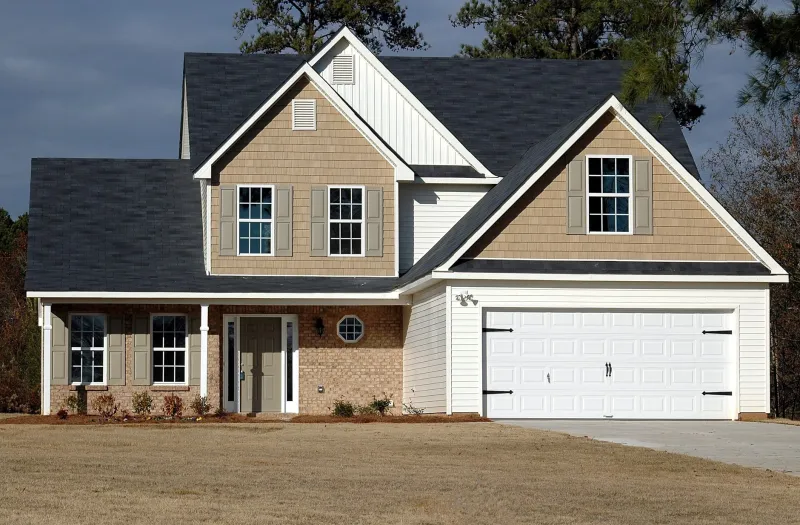
The Most Famous Phrase in Real Estate Has Always Been a Moving Target

Ask any real estate agent, any personal finance writer, or basically any homeowner who bought before 2010 what the most important factor in a home purchase is, and you'll hear the same three words: location, location, location.
It's the closest thing real estate has to a universal law. The reasoning is elegant: you can renovate a kitchen, add a bathroom, tear down walls, and replace a roof — but you cannot pick up a house and move it somewhere better. Location is permanent. Everything else is negotiable.
Except American real estate history keeps demonstrating, over and over, that location is far less permanent than that framing suggests. Neighborhoods rise and collapse. Industrial wastelands become artist districts become luxury condominiums. Suburbs that were once aspirational addresses become cautionary tales. The phrase survives intact while the addresses it's applied to change completely.
So what's actually going on?
A Phrase With a Fuzzy Origin
Before unpacking the idea, it's worth noting that nobody can quite agree on where 'location, location, location' came from. It's been attributed to a British real estate agent named Lord Harold Samuel, to a 1926 Chicago Tribune classified ad, and to various other sources depending on who's telling the story. The phrase is old enough and repeated often enough that its origins have blurred into legend.
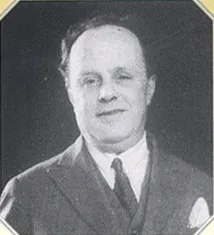 Photo: Lord Harold Samuel, via www.bach-cantatas.com
What's clear is that it became a fixture of American real estate advice sometime in the mid-20th century, as suburban development boomed and the idea of 'good neighborhoods' versus 'bad neighborhoods' became codified — sometimes through genuinely organic market forces, and sometimes through more deliberate mechanisms like redlining and exclusionary zoning.
The phrase carried a certain reassurance with it: buy in the right place, and your investment is safe. It made a complicated and volatile market feel predictable.
The Neighborhoods That Proved It Wrong
American real estate history is not short on examples that complicate the 'location is permanent' thesis.
Detroit's Boston-Edison neighborhood was one of the most desirable addresses in the Midwest in the 1920s — home to auto industry executives, large well-built houses, and the kind of social cachet that made it a premium location by any measure. By the 1980s, many of those same homes were worth a fraction of their former value, surrounded by blight, and difficult to insure.
Manhattan's Lower East Side was a dense, overcrowded immigrant neighborhood for much of the early 20th century — not a place anyone was buying into as an investment. Today it's one of the more expensive rental markets in the country.
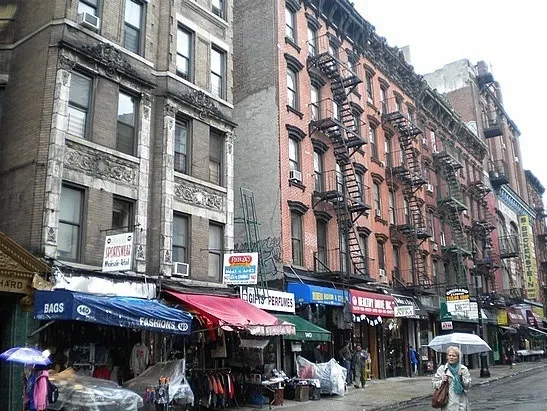 Photo: Manhattan's Lower East Side, via i.pinimg.com
Ditto for neighborhoods in cities like Washington D.C., Atlanta, Nashville, Denver, and Philadelphia that were overlooked, undervalued, or actively avoided for decades before becoming some of the most sought-after addresses in their respective metros.
The location didn't change. The city around it did.
What Actually Determines Whether a Location Holds Its Value
If location itself isn't the fixed variable it's presented as, what is? What actually determines whether a neighborhood appreciates, stagnates, or declines?
Researchers and urban economists have identified a few factors that matter more than the phrase typically acknowledges.
Infrastructure investment. Neighborhoods that attract sustained public investment — transit lines, park improvements, school funding, road upgrades — tend to appreciate. Neighborhoods that are systematically underfunded tend to decline regardless of their starting point. When a city builds a new light rail stop, the blocks around it change. That's not a natural market force; it's a policy decision.
Employment proximity. Locations that are convenient to major employment centers tend to hold value better than those that depend on a single industry or a commute pattern that can shift. When a major employer relocates, the 'great location' near their old campus can become a liability overnight.
Demographic pressure and migration. Population movement shapes real estate markets more powerfully than almost any other single factor. Sun Belt cities that absorbed massive domestic migration over the last decade saw property values in previously overlooked areas surge not because the location improved, but because more people needed to live somewhere.
Zoning and land use decisions. A quiet residential street can be rezoned for commercial development or high-density housing. A neighborhood's character — the thing that made it desirable — can change through policy decisions that individual buyers have no control over and often no warning about.
The Oversimplification That Stuck
The reason 'location, location, location' persists despite all of this is that it contains a real truth, just not a complete one.
Location does matter enormously. A well-situated home in a stable, well-resourced area will almost always outperform a similar home in a declining or poorly connected one. Proximity to employment, transit, good schools, and amenities has real, measurable value. Nobody is arguing that location is irrelevant.
The problem is that the phrase implies a kind of permanence and predictability that doesn't exist. It suggests that if you identify the right location today, you can be confident it will remain the right location for the duration of your ownership. History says otherwise.
Location is more like a snapshot than a guarantee. It captures where a neighborhood sits in its cycle at the moment of purchase — but cycles move, and the forces that move them aren't always visible from the sidewalk.
What Buyers Should Actually Be Watching
If 'location' is too blunt an instrument, what should buyers be paying attention to?
Direction of investment is more useful than current prestige. A neighborhood that's attracting new businesses, infrastructure spending, and development activity is often a better long-term bet than one that's already peaked.
Vulnerability to external shocks matters. Is the neighborhood's value tied to a single employer, a single industry, or a commute pattern that could change? Concentration creates risk.
Policy environment deserves attention. What are the city's zoning plans for the area? Are there infrastructure projects in the pipeline? Are property taxes stable or rising in ways that could squeeze out current residents?
None of this fits on a bumper sticker. But it's closer to what's actually happening in real estate markets than three repeated words can capture.
The Takeaway
Location matters — that part of the famous phrase is true. But 'location' isn't a fixed quality baked into a piece of land forever. It's a product of infrastructure, policy, employment, population movement, and investment decisions that change constantly. The neighborhoods that were prime addresses a generation ago aren't all prime today, and the overlooked blocks of today aren't all overlooked forever. Understanding that makes you a more realistic buyer than any three-word mantra can.