School Ratings Don't Measure Teaching. They Measure Zip Codes.

School Ratings Don't Measure Teaching. They Measure Zip Codes.
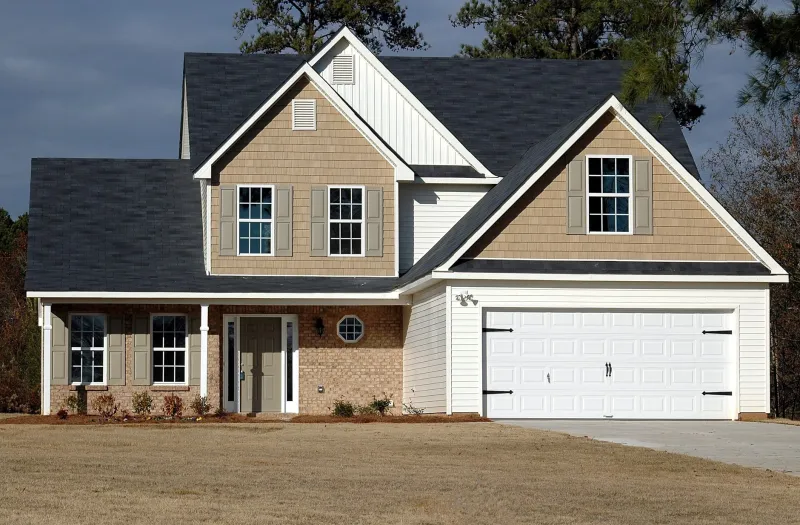
There's a version of this story playing out in real estate offices across the country every single day. A couple walks in, hands the agent a list of neighborhoods, and somewhere near the top of their criteria — usually right after budget and commute time — is the school rating. A 9 or 10 on GreatSchools. An A on Niche. Whatever the number, they want it high, and they're prepared to pay for it.
This belief is so widespread it barely registers as a belief anymore. It just feels like common sense. Better-rated school = better education = better outcomes for your kids. So you pay the premium, buy the house, and feel good about the decision.
The problem is that the premise — the part where the rating reflects teaching quality — is almost entirely wrong.
What Those Ratings Actually Measure
The most popular school rating platforms in the United States, including GreatSchools and Niche, construct their scores primarily from standardized test performance. A school where students score highly gets a high rating. A school where students struggle on standardized tests gets a low one.
That sounds logical until you ask the obvious follow-up question: what drives standardized test scores?
Decades of education research have answered that question pretty consistently. The single strongest predictor of how well students perform on standardized tests is the socioeconomic status of their families — specifically, household income and parental education levels. Students from higher-income homes tend to arrive at school with larger vocabularies, more access to books and tutoring, better nutrition, lower stress, and parents who have the time and resources to support their academic development. These advantages compound quickly.
This doesn't mean teachers at lower-rated schools are less skilled. In many cases, the opposite is true — educators in high-poverty schools are managing far more complex challenges in the classroom. But those challenges don't show up in a rating. The rating just reflects the outcome, not the effort or the quality of instruction behind it.
Where the Myth Gets Its Power
The idea that school ratings track educational quality rather than neighborhood demographics has been around long enough that it's become deeply embedded in how Americans think about real estate. Part of that is because the correlation is real, even if the causation is misread.
High-income neighborhoods do tend to have schools with more resources — newer facilities, more extracurricular offerings, better-funded programs. Those things matter. But they're a product of how American public education is funded, which ties school budgets to local property taxes. Wealthier areas generate more tax revenue, which funds better-resourced schools, which attract more affluent families, which raises property values further. It's a self-reinforcing loop.
Rating platforms didn't invent this dynamic, but they did package it into a number that looks like an objective quality score. And once that number existed, real estate marketing ran with it. Listings started featuring school ratings alongside square footage and lot size. Agents started using them as selling points. The number became shorthand for a complicated social reality that it was never really designed to explain.
What Researchers Have Found
Several education researchers and economists have examined the relationship between school ratings and what they're supposed to represent. The findings are worth sitting with.
A widely cited analysis by education journalist Nikole Hannah-Jones and others found that GreatSchools ratings closely tracked the racial and economic composition of a school's surrounding neighborhood. Schools serving predominantly low-income or minority populations received low scores regardless of factors like teacher quality, student growth, or community engagement.
 Photo: Nikole Hannah-Jones, via s26162.pcdn.co
Moreover, some researchers have pointed out that rating systems focused on raw test scores penalize schools that serve students with greater needs, even when those schools are delivering exceptional academic growth relative to where students started. A school that moves students two grade levels forward in a year might still receive a mediocre rating because its students began below average.
In short: the score tells you where kids ended up, not how well the school helped them get there.
The Premium You're Actually Paying For
When buyers pay extra to land in a top-rated district, they're largely paying for the privilege of living near other affluent families. That's not nothing — concentrated resources, engaged parent communities, and well-funded extracurriculars are real advantages. But it's worth being honest about what you're buying.
You're not necessarily buying a better teacher in the classroom. You're not buying a more innovative curriculum or more dedicated administration. You may be buying a school where your child will be surrounded by peers with similar socioeconomic backgrounds, which does have documented academic benefits — but that's a different claim than 'this school is better at teaching.'
And there's a real cost to this misunderstanding beyond the premium price tag. Families who can't afford to buy into high-rated districts sometimes assume their children's schools are simply worse — that the education itself is inferior. That's a demoralizing and often inaccurate conclusion drawn from a number that was never measuring what they thought it was.
What to Look For Instead
If you're buying a home with school quality as a genuine priority, there are better questions to ask than 'what's the rating?'
Look at student growth metrics, which measure how much academic progress students make in a given year regardless of where they started. Ask about teacher retention rates — schools with stable, experienced faculty tend to outperform those with high turnover regardless of their demographic profile. Visit the school. Sit in on a class if you can. Talk to parents who have kids enrolled.
None of that fits neatly into a single number. But a single number was never going to capture something as complicated as whether a school is actually good at teaching children.
The Takeaway
School ratings feel like an objective quality metric, but they function mostly as a map of neighborhood wealth. That doesn't make them completely useless — resources and peer environments do matter. But if you're paying a six-figure premium for a '10-rated' school district believing you've bought your child a better education, you deserve to know what you actually purchased. The rating reflects the neighborhood. The teaching is a separate question entirely.