The 'Safe' Mortgage Everyone Recommends Only Became Popular After a Banking Panic

The 'Responsible' Mortgage Choice Has a Panic-Driven Origin Story
Walk into any American mortgage broker's office, and they'll probably steer you toward a 30-year fixed-rate loan. It's presented as the safe, responsible choice—the mortgage equivalent of wearing a seatbelt. Financial advisors recommend it. Parents pass down the wisdom to their kids. The fixed-rate mortgage has become synonymous with smart homebuying.
But here's what most Americans don't know: this "obviously correct" choice only became popular after a specific financial crisis in the early 1980s traumatized an entire generation of borrowers. Before that panic, most Americans actually preferred adjustable-rate mortgages. And today, most of the world still does.
The story of how fixed-rate mortgages became the American standard reveals how one dramatic crisis can reshape financial culture for decades—sometimes in ways that don't actually serve borrowers' best interests.
When Mortgage Rates Hit 18% and Changed Everything
To understand America's fixed-rate obsession, you have to go back to 1981, when mortgage interest rates peaked at an almost unimaginable 18.45%. For context, that means a $100,000 mortgage would have cost about $1,544 per month in interest alone—more than many families' entire housing budgets today.
The rate spike wasn't random. Federal Reserve Chairman Paul Volcker had deliberately raised interest rates to extreme levels to combat runaway inflation. It worked, but the side effects were brutal. Homebuyers with adjustable-rate mortgages watched their monthly payments skyrocket beyond what they could afford. Foreclosures spiked. Families lost homes they'd been comfortably affording just months earlier.
 Photo: Paul Volcker, via i.stack.imgur.com
The trauma was real and widespread. An entire generation of Americans learned a harsh lesson: adjustable rates could destroy your life without warning. The solution seemed obvious—lock in a fixed rate and never worry about payment shocks again.
That collective trauma created the cultural preference for fixed-rate mortgages that persists today, even though the conditions that caused the 1980s crisis haven't repeated themselves in over four decades.
How the Rest of the World Finances Homes
While Americans developed an almost religious attachment to fixed rates, most other developed countries continued using adjustable-rate mortgages as their primary home financing tool. In the UK, Canada, Australia, and much of Europe, adjustable rates remain the norm.
The difference isn't that other countries are reckless—they just structure adjustable mortgages differently. Many use rate caps that limit how much payments can increase, offer longer adjustment periods, or tie rates to more stable benchmarks than the volatile indexes that caused problems in 1980s America.
The result? International borrowers often pay significantly less for mortgages than Americans with fixed rates. When U.S. fixed rates are 7%, Canadian borrowers might be paying 4% on adjustable loans. Over the life of a mortgage, that difference can amount to tens of thousands of dollars in savings.
Even more telling: many countries that do offer fixed-rate options see limited demand. Borrowers in these markets view fixed rates as expensive insurance against rate volatility rather than obviously superior products.
The Hidden Costs of America's Fixed-Rate Preference
Fixed-rate mortgages aren't actually "safer" in all circumstances—they just shift different types of risk around. When you lock in a fixed rate, you're essentially buying insurance against interest rate increases. Like any insurance, that protection costs money.
Lenders typically charge higher rates for fixed-rate loans because they're taking on the risk that rates might rise during your loan term. If rates fall, you benefit. If rates rise, the lender absorbs the loss. That risk transfer isn't free—it's built into the interest rate you pay.
For borrowers who move or refinance within a few years (which describes most Americans), the premium paid for fixed-rate protection often exceeds any benefit received. You end up paying extra for insurance you never actually needed.
There's also an opportunity cost. The extra money spent on fixed-rate premiums could be invested elsewhere or used to pay down principal faster. Over time, these alternative uses of money might generate better returns than the rate protection you purchased.
Why the 'Safety' Framing Persists
The mortgage industry has strong incentives to promote fixed-rate loans, even when they're not necessarily the best deal for borrowers. Fixed-rate mortgages are easier to sell to investors, create more predictable profits, and generate higher origination fees. Lenders make more money when borrowers choose fixed rates.
Real estate agents also prefer fixed-rate mortgages because they're easier to explain and less likely to cause deal complications. When every buyer gets the same type of loan, transactions move more smoothly. The industry's preference for operational simplicity reinforces the cultural bias toward fixed rates.
Meanwhile, the trauma of the 1980s rate spike gets passed down through financial advice that treats fixed rates as obviously superior. Parents who lived through that crisis naturally want to protect their children from similar experiences, even though the specific conditions that caused the 1980s problems are unlikely to repeat.
When Fixed Rates Actually Make Sense (and When They Don't)
Fixed-rate mortgages do serve legitimate purposes. They're genuinely valuable for borrowers who plan to stay in homes for many years, have tight budgets that can't absorb payment increases, or are buying during periods of unusually low rates.
But they're not automatically the right choice for everyone. Borrowers who expect to move within a few years, have flexible incomes, or are buying when fixed rates are historically high might benefit from adjustable-rate alternatives.
The key insight is that mortgage choice should depend on individual circumstances rather than cultural assumptions about which products are "safer." A fixed-rate mortgage that costs an extra $200 per month isn't actually safer for a borrower who struggles to make the higher payment.
Beyond the Trauma-Based Framework
America's fixed-rate preference made perfect sense in the context of 1980s rate volatility, but financial markets have evolved significantly since then. Modern adjustable-rate mortgages include protections that didn't exist during the crisis that spooked the previous generation.
Rate caps limit payment increases, longer adjustment periods provide stability, and improved lending standards reduce the risk of borrowers taking on unaffordable payments. Today's adjustable-rate products bear little resemblance to the loans that caused problems four decades ago.
The broader lesson? Financial conventional wisdom often reflects specific historical experiences rather than timeless truths about optimal borrowing strategies. The "safe" mortgage choice that everyone recommends became popular after a banking panic—and the conditions that justified that preference haven't existed for most Americans' adult lives.
Understanding this history doesn't mean adjustable rates are automatically better, but it does suggest that the fixed-rate preference deserves more scrutiny than it typically receives. Sometimes the "obviously safe" choice is just the choice that made sense during someone else's crisis.
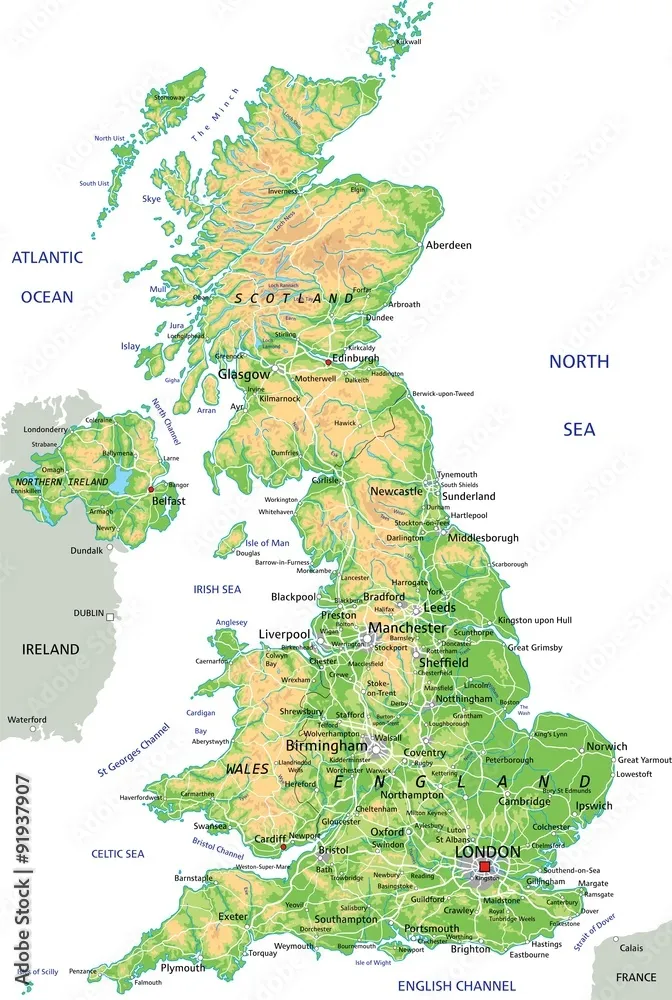 Photo: United Kingdom, via as2.ftcdn.net