The Wall-Free Home Promise That Actually Made Families More Distant
The Great Wall Removal Experiment
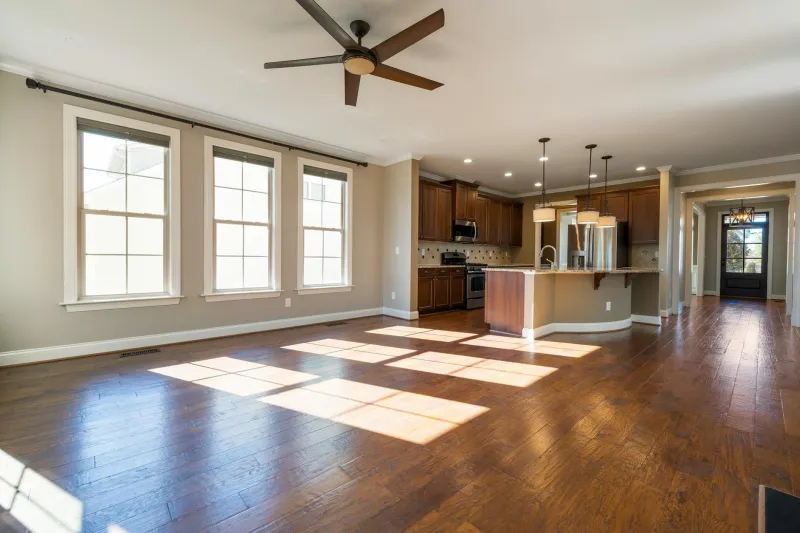
Walk through any newly built American home today, and you'll likely find yourself standing in a vast, uninterrupted space where kitchen, dining, and living areas flow seamlessly together. This is the open floor plan—the default layout that has dominated home design for decades. Most people assume this arrangement became popular because it naturally brings families closer together.
The reality tells a different story entirely.
When TV Producers Became Home Designers
The open floor plan's rise to dominance wasn't driven by family research or behavioral studies. It emerged from television production needs and real estate photography requirements. In the 1950s and 60s, TV shows needed camera crews to move freely through homes during filming. Walls got in the way of equipment and sight lines.
Real estate agents quickly noticed that homes photographed better without walls breaking up the visual space. Rooms appeared larger in listings, and staging became simpler when decorators could work with one big area instead of multiple separate rooms.
What started as a practical solution for media production gradually transformed into a lifestyle ideal that the housing industry actively promoted.
The Noise Problem Nobody Talks About
Research from environmental psychology reveals something surprising: families in open floor plan homes actually spend less quality time together than those in traditional layouts. The reason comes down to acoustics and sensory overload.
In an open space, every conversation competes with every other sound. The dishwasher runs while someone watches TV, while another person tries to help with homework, while someone else takes a phone call. Instead of creating togetherness, this cacophony often drives family members to retreat to bedrooms—the only spaces with doors.
A 2019 study from the University of California found that children in open-plan homes had more difficulty concentrating on homework and showed higher stress responses during family dinner times compared to kids in homes with defined spaces.
 Photo: University of California, via get.wallhere.com
The Privacy Paradox
Open floor plans were supposed to eliminate the isolation of separate rooms, but they created a different kind of separation. When there's nowhere to have a private conversation or decompress alone, family members often become more distant emotionally.
Parents report feeling like they can never truly relax when cooking dinner becomes a performance visible from the living room. Teenagers especially struggle with the constant visibility, leading many families to spend more time in bedrooms or other private spaces.
The irony is striking: removing physical barriers often creates emotional ones.
How Architects Never Got on Board
While real estate marketing embraced the open concept, many residential architects remained skeptical. Christopher Alexander's influential "A Pattern Language" argued that homes need what he called "intimacy gradients"—spaces that transition from public to private.
 Photo: Christopher Alexander, via i.pinimg.com
Architectural firms consistently reported that clients requested open floor plans based on what they'd seen in magazines or on house-hunting shows, not because they'd lived successfully in such spaces before.
Yet the market demand became so strong that builders made open layouts standard, regardless of whether design professionals recommended them for actual family living.
The Renovation Regret
Today's home improvement reality shows continue promoting wall removal as an automatic upgrade, but renovation contractors tell a different story. Many report being hired to add walls back into homes that were previously opened up.
Common complaints include:
- Inability to control temperature in different areas
- Cooking smells spreading throughout the entire living space
- Difficulty maintaining different activity levels (quiet reading vs. active play)
- Lack of spaces for focused work or study
The most telling statistic: homes with defined rooms typically sell faster and for higher prices than open-concept homes of similar size and quality.
Why the Myth Persists
The open floor plan ideal continues partly because it serves multiple industry interests. Builders save money on materials and labor when they install fewer walls. Real estate agents can emphasize square footage more easily when spaces flow together. Home stagers can make smaller homes appear larger.
Meanwhile, the actual research on how families function in different layouts rarely makes it into popular home design conversations.
The Comeback of Thoughtful Separation
Younger homebuyers, many of whom grew up in open-concept homes, increasingly seek properties with defined spaces. They've experienced firsthand how difficult it is to work from home when your kitchen table doubles as your office and your living room.
Forward-thinking architects now design what they call "broken plan" layouts—spaces that can be opened up for entertaining but also closed off when privacy or quiet is needed.
The Real Lesson About Home Design
The open floor plan story reveals how quickly a practical solution for one industry (television production) can become an unquestioned lifestyle standard. It shows how marketing messages about family togetherness can override actual evidence about how families live.
Most importantly, it demonstrates that the best home layouts aren't necessarily the ones that photograph well or stage easily—they're the ones that support how people actually want to live their daily lives.
Before your next home search or renovation project, consider what your family actually does in shared spaces versus what you think you're supposed to want based on design trends. The most valuable real estate insight might be recognizing that sometimes, walls aren't barriers—they're tools for creating the kind of home life you actually want to live.