What Real Estate Agents Mean When They Call a Neighborhood 'Up-and-Coming' (And What They're Not Saying)
If you've spent any time browsing listings or talking to a real estate agent, you've almost certainly heard it. The neighborhood is up-and-coming. It's got potential. People are starting to notice it. The implication is clear: buy now, before everyone else figures it out.
But here's what rarely gets explained — the phrase "up-and-coming" has no agreed-upon definition in real estate. It's not a data point. It's not a market classification. It's a feeling, packaged as a forecast, and handed to buyers who are often already stretching their budgets to get into a market at all.
That doesn't mean every neighborhood labeled this way is a bad investment. Some of them genuinely do change. But understanding what's actually happening beneath that language — and what gets left out of the conversation — can be the difference between a smart purchase and a very expensive lesson.
The Phrase Does Real Work Without Saying Much
Marketing language in real estate exists for a reason. Agents and sellers need to generate interest, and positive framing is part of that job. But "up-and-coming" is particularly useful because it manages expectations while maintaining enthusiasm. It signals that the neighborhood isn't great right now — but it also tells you that's supposedly about to change.
What it doesn't tell you is when, by how much, or for whom.
In practice, the term gets applied to neighborhoods that are genuinely on the rise, neighborhoods that have been "about to change" for fifteen years and haven't, and neighborhoods experiencing significant displacement that gets reframed as revitalization. All three get the same label. Buyers rarely know which one they're looking at.
What Actually Predicts Neighborhood Change
Real estate researchers and urban economists have spent decades trying to identify what genuinely precedes neighborhood transformation. The honest answer is that it's complicated — but there are some signals that show up consistently in the data.
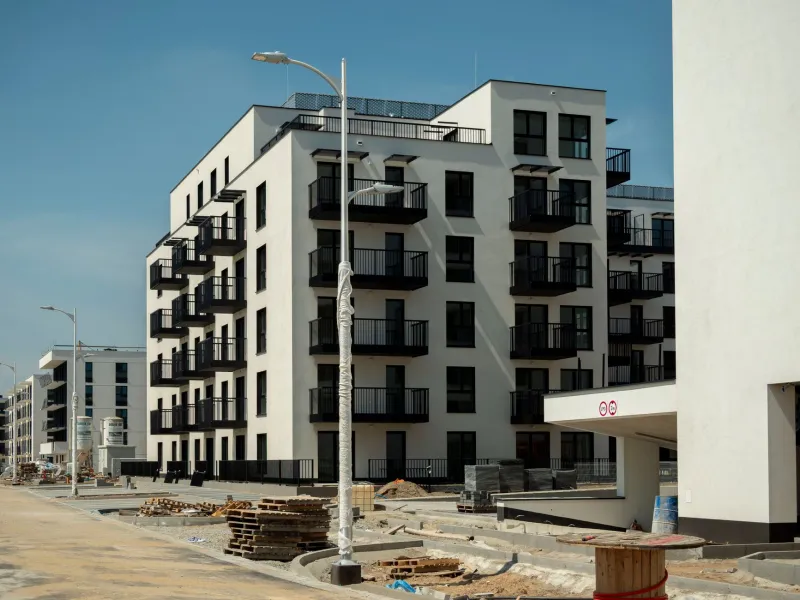
Permit activity is one of the clearest early indicators. When a city issues a surge of residential and commercial building permits in a specific area, it usually means developers have already run the numbers and decided the neighborhood is worth the risk. That's a meaningful signal, and it's public information in most municipalities.
Anchor institution investment matters too. When a hospital expands, a university builds a satellite campus, or a transit line gets approved nearby, surrounding neighborhoods tend to follow. These aren't rumors — they're multi-year capital commitments that show up in planning documents and local news long before they show up in listing descriptions.
Rent-to-income ratios in neighboring areas also matter. When adjacent, already-established neighborhoods become unaffordable, demand tends to spill into surrounding zip codes. That spillover is often what agents are actually describing when they say a neighborhood is up-and-coming — it's not that the neighborhood itself changed, it's that everything around it got too expensive.
Business license filings are another underused signal. The specific types of businesses opening in an area — coffee shops, fitness studios, specialty grocery — tend to precede price appreciation, not follow it. That's not a value judgment; it's just how the pattern tends to move.
None of these signals are foolproof, and none of them are what most buyers check. Instead, buyers tend to rely on what the listing says, what the agent implies, and what the neighborhood feels like on a Sunday afternoon walk.
The Part Nobody Mentions
Neighborhood change — real, documented neighborhood change — almost always involves displacement. When prices rise in a previously affordable area, the people who lived there first often can't afford to stay. That's a social and economic reality that rarely makes it into the sales pitch.
Buyers aren't being asked to feel guilty about purchasing a home. But understanding what "up-and-coming" can actually mean in practice — rising costs pushing out long-term residents, shifting demographics, businesses catering to new arrivals rather than existing ones — gives you a more complete picture of what you're walking into.
Some buyers are comfortable with that. Some aren't. The problem is that the language used in listings doesn't give you enough information to make that call yourself.
Why the Vagueness Is Useful
It's worth asking why real estate language stays this imprecise. Part of the answer is legal — agents are cautious about making specific predictions about value appreciation, which can expose them to liability. Vague optimism is safer than specific forecasting.
But part of it is also that specificity would complicate the sale. If an agent said "this neighborhood has seen permit activity increase 40% in the last 18 months, but median income for current residents is well below the city average, and comparable sales data suggests appreciation has been flat for three years" — that's a harder pitch than "people are really starting to discover this area."
Buyers deserve the harder pitch. Or at least, they deserve to know how to find the underlying data themselves.
Before You Buy Into the Story
If you're seriously considering a neighborhood labeled up-and-coming, it's worth spending an hour on things most buyers skip. Pull the permit data from the city's planning department. Look at the transit authority's capital plans. Check whether anchor employers or institutions nearby have announced expansions. Look at what opened and what closed in the last two years — not just what's there now.
And ask your agent a direct question: what specific changes have happened here in the last 36 months? Not what they expect to happen — what has already happened. The answer will tell you a lot, whether it's detailed or vague.
"Up-and-coming" can be real. But it can also be a placeholder for uncertainty dressed up as opportunity. Knowing the difference is worth more than the phrase ever was.