The Victorian Property Bubble That Made 'Safe as Houses' Mean the Opposite
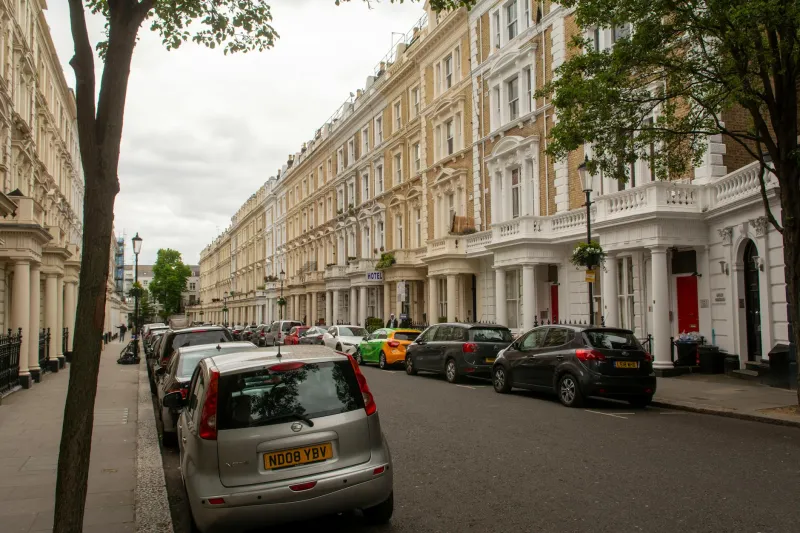
The Victorian Property Bubble That Made 'Safe as Houses' Mean the Opposite
Walk into any American real estate office today and you'll hear the phrase "safe as houses" thrown around like gospel truth. Agents use it to describe stable investments, financial advisors invoke it when discussing property portfolios, and your neighbor probably muttered it while explaining their latest home purchase. But here's what might surprise you: this seemingly bulletproof expression was born from one of the most spectacular property market collapses in modern history.
The Phrase Everyone Gets Wrong
Most people assume "safe as houses" has always meant what it sounds like—that houses represent the ultimate in financial security. It's become so embedded in American culture that we use it without thinking, passing it down like an unquestioned financial truth. The phrase feels intuitive: houses are solid, permanent, valuable. What could be safer?
But language historians tell a different story. The expression likely emerged during the Victorian era in Britain, specifically around the 1840s and 1850s, when property speculation was reaching fever pitch across the British Isles.
When Houses Weren't Safe at All
The mid-1800s saw one of history's most dramatic property booms. Railroad expansion was connecting previously isolated areas, industrial growth was creating new wealth, and suddenly everyone wanted in on the property game. Sound familiar? Victorian investors poured money into housing developments, land speculation, and property schemes that promised guaranteed returns.
The problem was that many of these "safe" house investments were anything but secure. Developers built entire neighborhoods on speculation, often in areas with questionable long-term prospects. Railway companies promoted land sales along proposed routes that sometimes never materialized. Property prices soared based on optimism rather than fundamentals.
When reality hit, it hit hard. The railway mania bubble burst in the late 1840s, taking property values down with it. Thousands of middle-class investors who thought they were making "safe as houses" investments found themselves holding worthless deeds to properties in ghost towns or half-built developments.
The Irony That Became Truth
Here's where the story gets interesting: "safe as houses" likely started as bitter irony. Victorian newspapers and literature from the period show the phrase being used with a knowing wink—a way of acknowledging that houses weren't actually safe investments at all. It was the 1840s equivalent of saying something was "too big to fail" while watching it collapse.
But something strange happened over the decades. As memories of the property crashes faded and new generations grew up, the ironic edge disappeared. The phrase gradually transformed from sardonic commentary to genuine belief. By the early 1900s, "safe as houses" had shed its sarcastic origins entirely.
How America Adopted a British Bubble's Legacy
The expression crossed the Atlantic just as America was experiencing its own property booms and busts. It arrived during the Gilded Age, when American cities were expanding rapidly and real estate speculation was creating fortunes and destroying them just as quickly.
American investors, unaware of the phrase's ironic British origins, embraced "safe as houses" as validation of their property investments. It became embedded in American financial culture, passed down through generations who had no idea they were repeating a joke about a Victorian property bubble.
Why We Keep Repeating Financial Myths
The transformation of "safe as houses" reveals something fascinating about how financial wisdom gets passed down. We inherit phrases, beliefs, and assumptions from previous generations without questioning their origins or examining whether they still make sense.
This isn't unique to real estate. Think about other financial sayings Americans use without thinking: "money doesn't grow on trees" (but we print more when needed), "a penny saved is a penny earned" (ignoring inflation and opportunity cost), or "buy low, sell high" (easier said than done). Many of our most trusted financial maxims come from different economic eras entirely.
The Modern Reality Check
Today's housing market would probably seem familiar to those Victorian speculators. We see similar patterns: rapid price increases, investment based on projected future growth, entire markets driven by speculation rather than fundamentals. The 2008 housing crisis proved that houses aren't automatically safe investments—something those Victorian investors learned the hard way.
Yet we continue using "safe as houses" without irony, just as we did before 2008 and just as the Victorians did before their bubble burst. The phrase has become so detached from its origins that even major financial collapses can't shake our faith in its meaning.
What This Means for Today's Investors
Understanding the real history of "safe as houses" doesn't mean property is a bad investment—it means questioning inherited financial wisdom. The Victorians who lost money in property speculation weren't stupid; they were following the conventional wisdom of their time, just as we follow ours.
The lesson isn't that houses are unsafe investments, but that no investment is automatically safe simply because everyone says so. Even our most trusted financial expressions can carry historical baggage we're completely unaware of.
Next time someone tells you an investment is "safe as houses," remember you're hearing an echo of Victorian property speculators who learned, too late, that safety and houses don't always go together. Sometimes the most dangerous financial advice comes wrapped in the most comforting language.