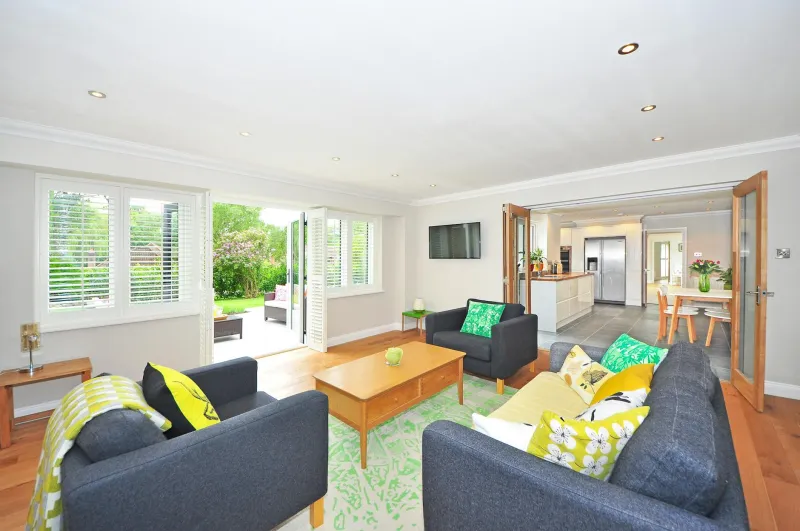
Walk through any American home built or renovated in the past two decades, and you'll likely encounter the same basic layout: a vast, uninterrupted space where kitchen, dining, and living areas flow seamlessly together. The open floor plan became so synonymous with desirable living that closed-off rooms started feeling claustrophobic and outdated by comparison.
But if open layouts are so perfect for modern life, why are families increasingly struggling with noise, mess, and the complete lack of privacy they create? The answer reveals how television programming and real estate marketing convinced us to want something that doesn't actually match how most people live.
The Television Revolution That Changed Architecture
The open floor plan obsession didn't emerge from architectural innovation or family lifestyle research. It was born in television studios, where producers needed to film families interacting across multiple areas without walls blocking camera angles.
Home renovation shows like "Trading Spaces" and later "Fixer Upper" made sledgehammer wall removal into entertainment. The dramatic reveal of "opening up the space" became a television trope that viewers began associating with home improvement success. What worked for TV production values somehow became the gold standard for family living.
Real estate staging companies quickly caught on. Open layouts photograph beautifully for online listings, making spaces appear larger and more luxurious than they actually are. The absence of walls creates sight lines that stretch across multiple rooms, generating an illusion of spaciousness that translates perfectly to the small screens where most home shopping now happens.
The Marketing Message vs. Reality
The sales pitch for open floor plans centered on three main promises: they'd bring families together, create flexible living spaces, and make homes feel larger and more modern. Each of these claims sounds logical until you examine how families actually use their homes.
The "togetherness" argument assumes that parents and children want to be in constant visual and auditory contact. In reality, healthy family dynamics require both connection and separation. Kids need space to play without disturbing adult conversations. Parents need areas where they can have phone calls, work from home, or simply decompress without being on display.
The "flexibility" promise suggests that open spaces can serve multiple functions throughout the day. But most families quickly discover that without defined boundaries, spaces become chaotic. The kitchen island becomes a homework station covered in backpacks and art supplies. The living area turns into a permanent toy zone. The dining space disappears under mail, laptops, and whatever else needs a horizontal surface.
The Problems No One Talks About
Living in an open floor plan creates practical challenges that renovation shows never address. Cooking smells permeate the entire main floor, making the whole house smell like last night's fish dinner. Kitchen noise—blenders, dishwashers, sizzling pans—makes it impossible to have conversations or watch television in adjacent areas.
Children's activities become everyone's business. A toddler's meltdown in the play area disrupts the entire household. Teenagers can't retreat to do homework without being in the middle of family chaos. Parents lose the ability to have adult conversations without little ears overhearing everything.
The acoustic problems are particularly severe. Sound bounces off hard surfaces and travels freely through open spaces, creating an echo chamber effect that many families find exhausting. Studies show that constant background noise increases stress hormones and reduces concentration, especially in children.
The Cleaning and Organizing Nightmare
Open floor plans look pristine in magazine photos, but maintaining that appearance requires constant vigilance. With no walls to contain messes, clutter in any area makes the entire space look chaotic. Families find themselves either cleaning constantly or living in permanent visual disorder.
Storage becomes a major challenge. Traditional homes had closets, pantries, and utility rooms tucked behind doors where necessary but unsightly items could be hidden. Open layouts prioritize visual flow over practical storage, leaving families scrambling to find places for everything from cleaning supplies to children's toys.
The pressure to keep everything "magazine ready" creates stress for families who just want to live comfortably in their homes. Parents report feeling like they're constantly performing for visitors rather than relaxing in their own space.
Why Architects Are Quietly Moving Away
Interestingly, many residential architects have begun incorporating more defined spaces into their designs, even when clients initially request open floor plans. They've observed that families are happier with what they call "broken plan" layouts—spaces that flow together but include strategic walls, partial barriers, or level changes that create zones within the larger area.
High-end custom homes increasingly feature separate family rooms, formal living spaces, and even butler's pantries that allow kitchen messes to be hidden during entertaining. These aren't returns to Victorian-era compartmentalization, but thoughtful approaches to balancing openness with functionality.
Commercial designers have long understood that different activities require different environments. Offices use a mix of open collaboration areas and private spaces. Restaurants carefully control sight lines and acoustics. Yet residential design became obsessed with eliminating all barriers, regardless of how people actually live.
The Cultural Shift That's Already Happening
The pandemic accelerated awareness of open floor plan limitations. Families suddenly working and schooling from home discovered that they needed separate, quiet spaces for video calls and concentration. The home that looked perfect for entertaining became dysfunctional for daily life when everyone needed to be there simultaneously.
Younger homebuyers, many of whom grew up in open floor plan homes, are increasingly seeking properties with defined rooms. They've experienced firsthand the challenges of doing homework while parents cook dinner and watch TV in the same space.
Real estate agents report growing interest in homes with separate dining rooms, family rooms, and even formal living spaces that were considered outdated just a few years ago. The pendulum is swinging back toward layouts that prioritize livability over visual drama.
What We're Learning About How Families Actually Live
Research on family behavior reveals that healthy households need both gathering spaces and retreat areas. Children develop better focus and independence when they have quiet zones for activities like reading and homework. Parents maintain better relationships when they can occasionally have conversations without being overheard or interrupted.
The most successful family homes create what designers call "gradients of privacy"—spaces that range from completely open and social to semi-private to fully private. This allows family members to choose their level of interaction throughout the day rather than being forced into constant togetherness.
The Takeaway
The open floor plan trend wasn't based on careful study of how families live—it was driven by the visual needs of television production and real estate photography. Understanding this history helps explain why so many families feel frustrated with layouts that look perfect but function poorly.
The best homes balance openness with definition, creating spaces that can bring families together when desired while also providing retreat areas when needed. As the trend begins to shift, the most valuable homes may be those that prioritize how families actually want to live over how spaces look in photos.