That HOA Fee in the Listing? It's Not a Fixed Number. It's a Starting Point.
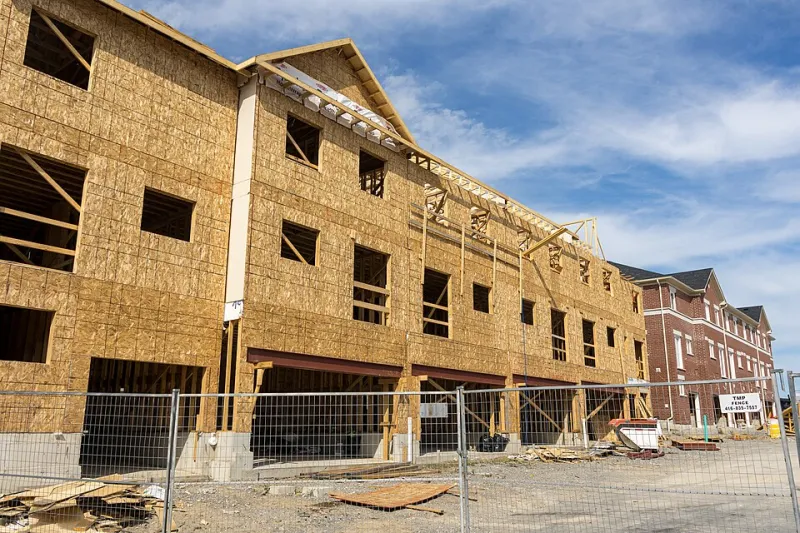
Photo: Dillan Payne, CC BY-SA 4.0, via Wikimedia Commons
When buyers look at a condo or a home in a planned community, the HOA fee tends to get treated like a utility bill — a known quantity you can plug into a budget and forget about. If the listing says $350 a month, that's what you plan for.
But HOA fees don't work like that. They're not stable. They're not capped in most cases. And the structural economics of how community associations actually function almost guarantee that the number you see today will be higher — sometimes significantly higher — by the time you've settled in.
This isn't a scare story. It's just how the math works. And most buyers never look at the math.
Why Fees Exist in the First Place
Homeowners associations exist to maintain shared infrastructure. Roofs on condo buildings. Parking lots. Pools. Elevators. Landscaping. The HOA collects dues from owners, pools the money, and pays for upkeep and management.
In theory, this is efficient. Shared costs spread across many owners should be cheaper than each person managing their own building. In practice, it depends entirely on how well the association is run — specifically, how honestly it funds its reserve account.
The reserve account is where things get complicated.
The Reserve Problem Nobody Explains at Closing
Every shared component in a planned community has a lifespan. A roof lasts 20–30 years. An elevator needs major servicing every decade. A pool deck has to be resurfaced. A parking garage eventually needs structural repairs.
A well-run HOA calculates the expected replacement cost of every major component, figures out when it will need replacement, and sets aside money each month so the funds are there when the time comes. This is called a reserve study, and it's the financial backbone of a healthy association.
The problem is that many HOAs — particularly older ones or those that have kept fees artificially low to attract buyers — are chronically underfunded. The American Community Association Institute has estimated that a significant portion of community associations across the country are not fully funded for their anticipated reserve needs. Some estimates put the underfunded share at more than 70 percent.
When reserves are inadequate and a major repair arrives, the association has two options: raise monthly dues sharply, or issue a special assessment — a one-time charge levied against every owner to cover the shortfall. Neither is pleasant. Both are more common than most buyers realize.
What Fee Escalation Actually Looks Like
It rarely happens all at once. That's part of why it catches people off guard.
A new development might open with HOA fees set intentionally low — developers sometimes subsidize fees early on to make units more attractive to buyers. Once the developer hands control of the association to the homeowners, fees often rise to reflect actual operating costs.
From there, annual increases of 3–5 percent are common in many markets. That sounds modest. But compounded over a decade, a $300 monthly fee becomes $400 to $500. Over fifteen years, it can push past $600.
And that's before any special assessments. In communities with aging infrastructure — think condo buildings constructed in the 1980s and 1990s — large one-time assessments for things like elevator replacement, roof overhauls, or structural repairs can run $5,000 to $30,000 per unit. Sometimes more.
In Florida, following the 2021 Surfside condominium collapse, the state passed legislation requiring stricter reserve funding for condo buildings. The result? Monthly fees in many Florida condo communities jumped dramatically — in some cases doubling or tripling — almost overnight. Owners who had budgeted around a stable fee found themselves facing a very different financial reality.
That's an extreme example, but it illustrates something important: the fee you see at purchase reflects current choices, not future obligations.
What the Listing Doesn't Tell You
The HOA fee on a listing is a snapshot. It tells you what the association is currently charging. It tells you nothing about:
- Whether the reserve fund is adequately funded
- When the last reserve study was conducted
- What major repairs are anticipated in the next five to ten years
- Whether the association has a history of special assessments
- What the fee was three years ago (and how fast it's been rising)
- Whether the association is currently in litigation
All of this information is available — it's just rarely volunteered. HOA documents, meeting minutes, reserve study reports, and financial statements can be requested as part of the due diligence process. In most states, sellers of condos and planned community homes are required to provide these documents before closing.
Most buyers skim them, if they look at all.
What to Actually Ask Before You Buy
Before committing to any property with an HOA, a few specific questions will tell you far more than the listed fee:
What percentage funded is the reserve account? Anything below 70 percent is worth scrutinizing. Below 50 percent is a real concern.
Has there been a special assessment in the last five years? If yes, for what, and how much? The answer tells you both the history of the building and the association's financial habits.
What does the most recent reserve study say? This document — if it exists and is current — will outline anticipated major expenses and whether the association is on track to fund them.
What has the monthly fee been for the past five years? A trend line is far more useful than a single number.
The Real Takeaway
HOA fees are not fixed costs. They are variable obligations tied to the financial health of an organization you're joining whether you want to or not. The fee in the listing reflects today's budget decisions — not tomorrow's roof, not the parking garage that needs attention, not the pool deck that's been patched for five years.
Building HOA costs into your long-term budget means building in room for increases — not just inflation-level adjustments, but the possibility of significant jumps. The buyers who get caught off guard are almost always the ones who took the listing number at face value and never looked at what was behind it.