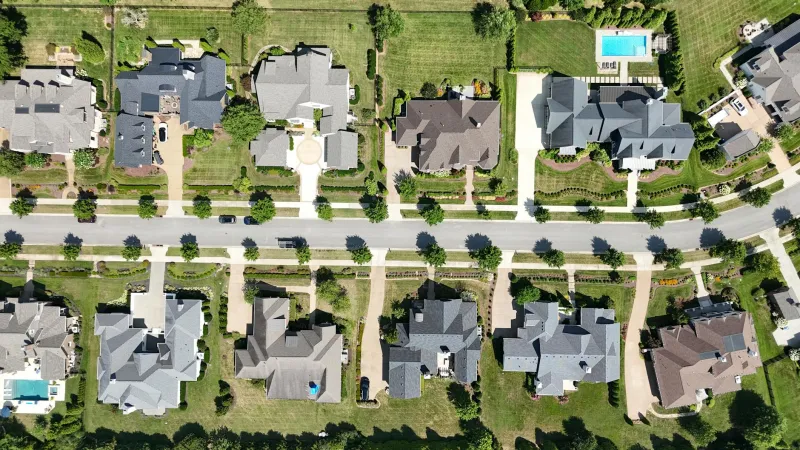
Ask any American about building wealth, and they'll likely mention homeownership within the first few sentences. The belief that buying a house is the cornerstone of financial security runs so deep that questioning it feels almost unpatriotic. But this wasn't always the case, and it didn't happen by accident.
The transformation of homeownership from basic shelter into a wealth-building strategy was one of the most successful marketing campaigns in American history—one that most people don't even realize they've been exposed to.
Before the Sales Pitch
In the early 1900s, most Americans rented their homes. Homeownership rates hovered around 45%, and buying property was viewed primarily as a way to secure shelter, not build wealth. Wealthy families might own property as one part of a diversified investment strategy, but the idea that ordinary workers should tie up most of their net worth in a single asset would have seemed financially reckless.
That changed dramatically after World War II, but not because Americans suddenly discovered the financial benefits of homeownership. It changed because the federal government needed to solve several problems at once, and promoting homeownership seemed like an elegant solution.
The Policy Machine Kicks Into Gear
The government faced a crisis in the 1940s: millions of returning veterans needed housing, the economy needed stimulation, and policymakers worried about social stability. The solution was a coordinated effort to make homeownership accessible and desirable for the middle class.
The GI Bill provided low-interest loans to veterans. The Federal Housing Administration standardized mortgages and reduced down payment requirements. Tax policy made mortgage interest deductible. Suburban development was subsidized through highway construction and zoning policies that favored single-family homes.
But policy changes weren't enough. The government needed to change how Americans thought about homeownership itself.
Manufacturing the American Dream
Government agencies, working with real estate and construction industries, launched what amounted to a decades-long advertising campaign. Homeownership was rebranded from a housing choice into a patriotic duty and a guaranteed path to prosperity.
The messaging was sophisticated and pervasive. Government publications promoted homeownership as "building equity" rather than paying for shelter. Real estate associations funded studies emphasizing the wealth-building potential of property ownership. Banks marketed mortgages not as debt but as "forced savings plans."
The campaign worked so well that within a generation, the idea that "rent is wasting money" became conventional wisdom, despite the fact that renting often makes more financial sense.
The Math They Don't Advertise
Here's what the marketing materials rarely mention: for most homeowners, the majority of their monthly payment goes toward interest, taxes, insurance, and maintenance—expenses that disappear forever, just like rent.
In the early years of a typical 30-year mortgage, only about 20% of your payment goes toward building equity. The rest is pure expense. Factor in property taxes, insurance, maintenance, and the opportunity cost of your down payment, and many homeowners would be financially better off renting and investing the difference.
Even when homes appreciate in value, the gains often barely keep pace with inflation after accounting for all ownership costs. The National Association of Realtors' own data shows that median home prices have increased at roughly the rate of inflation over the past century, not the dramatic wealth-building returns that homeownership mythology suggests.
Why the Myth Persists
The homeownership-as-investment belief survives because it benefits so many powerful interests. Real estate agents earn commissions on sales, not rentals. Mortgage lenders profit from loan origination and interest payments. Construction companies need buyers for new homes. Local governments rely on property taxes.
Meanwhile, the psychological factors that made the original marketing campaign so effective continue to work. Homeownership feels like building something permanent, even when the financial reality is more complex. The monthly mortgage payment creates an illusion of forced savings, even when much of that payment represents pure expense.
The tax benefits, while real, are often overstated. The mortgage interest deduction primarily benefits higher-income households who itemize deductions, and the tax savings rarely offset the additional costs of ownership for middle-class families.
The Hidden Costs of the Dream
The push toward homeownership has created unintended consequences that policymakers are only beginning to acknowledge. When families tie up most of their wealth in a single, illiquid asset, they become less financially flexible and more vulnerable to local economic downturns.
The emphasis on homeownership has also contributed to geographic inequality. Workers in expensive coastal cities often can't afford to buy homes, while those in declining Rust Belt cities find themselves trapped by properties that have lost value.
Meanwhile, the rental market has been systematically underinvested in, creating artificial scarcity and higher costs for renters—many of whom might prefer to rent even if buying were affordable.
What Financial Advisors Actually Say
Talk to fee-only financial planners—those who don't earn commissions from real estate transactions—and you'll hear a different perspective. Many quietly advise clients that renting and investing in diversified portfolios often produces better long-term returns than homeownership, especially when you factor in the flexibility to move for career opportunities.
The math is particularly stark in expensive markets. In cities where homes cost eight or ten times median incomes, the monthly cost of ownership often exceeds rent by thousands of dollars. Investing that difference in stock market index funds has historically produced better returns than real estate appreciation.
The Bottom Line
Homeownership isn't inherently bad, but it's not the automatic wealth-building strategy that decades of marketing have made it seem. For some people in some circumstances, buying a home makes perfect sense. For others, renting provides better financial outcomes and greater life flexibility.
The key is recognizing that your housing choice should be based on your specific situation and goals, not on cultural programming that was designed to solve policy problems from 80 years ago. Understanding the history behind the homeownership myth helps you make decisions based on current financial reality rather than inherited assumptions about what it means to build wealth in America.