When Real Estate Agents Say 'Good Bones,' They're Not Talking About What You Think
When Real Estate Agents Say 'Good Bones,' They're Not Talking About What You Think
Walk through any fixer-upper with a real estate agent, and you'll almost certainly hear it: "This house has good bones." The phrase rolls off tongues so easily that most buyers nod along, assuming they understand what it means. After all, it sounds positive—like the house has a solid foundation for improvement.
But here's what most people don't realize: when construction professionals use "good bones," they're referring to something very specific. And it's probably not what your agent is highlighting.
The Original Meaning Construction Workers Actually Use
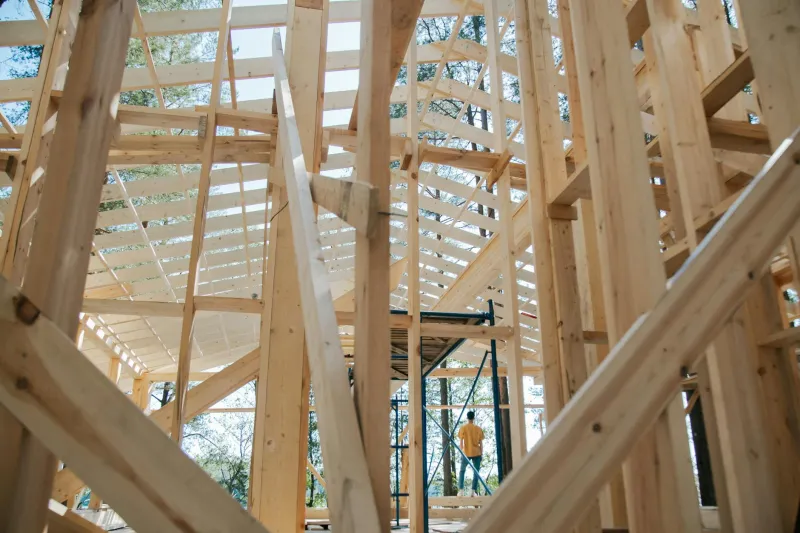
To builders, contractors, and structural engineers, "good bones" refers to the structural integrity of a home's frame, foundation, and load-bearing elements. Think of it as the skeleton that everything else hangs on—the foundation, floor joists, wall studs, roof trusses, and major support beams.
These are the expensive, labor-intensive parts of a house that are nightmare scenarios to replace once a home is built. A foundation that's settling unevenly? That's bad bones. Floor joists that are sagging or improperly spaced? Bad bones. A roof structure that's undersized for the local snow load? Definitely bad bones.
When a contractor says a house has "good bones," they mean the stuff that would cost $50,000 to $200,000 to fix is actually in decent shape.
How Real Estate Marketing Changed the Meaning
Somewhere along the way, the real estate industry adopted this construction term and stretched it to cover almost anything that looked promising about an older home. Today, "good bones" in a listing often means:
- The rooms have decent proportions
- There are attractive original features like hardwood floors or crown molding
- The layout has potential
- The architectural style is appealing
Notice what's missing? Any actual reference to structural soundness.
A real estate agent might point to beautiful bay windows and say "look at these good bones" while completely overlooking the fact that the foundation has a crack running through it, or that the roof needs $15,000 in repairs.
Why This Gap in Understanding Costs Buyers Money
This linguistic shift creates a dangerous disconnect. Buyers hear "good bones" and think they're getting reassurance about the home's structural integrity. Meanwhile, agents are often commenting on aesthetic features that, while nice, don't address the most expensive potential problems.
The result? Buyers who think they're getting a structurally sound house that just needs cosmetic updates often discover major structural issues after purchase. What seemed like a $20,000 renovation project becomes a $75,000 nightmare involving foundation repair, roof replacement, or electrical system overhauls.
This misunderstanding is particularly costly because structural problems are exactly the kind of issues that:
- Are expensive to diagnose without professional inspection
- Can't be easily spotted during a casual walkthrough
- Cost exponentially more to fix after you've already bought the house
- May not be covered by typical homeowner's insurance
The Questions You Should Actually Ask
When you hear "good bones" during a showing, here's what to ask instead of just nodding along:
About the foundation: "When was the foundation last inspected? Are there any signs of settling or water intrusion?"
About the structure: "How old is the roof? Have there been any additions that might affect the structural integrity?"
About major systems: "When were the electrical, plumbing, and HVAC systems last updated?"
About the framing: "Are the floor joists original? Have any load-bearing walls been modified?"
These questions force the conversation back to the actual "bones" of the house—the expensive stuff that matters for your long-term financial health.
Getting Real Information About Structural Health
If you're seriously considering a house that's being sold on its "good bones," insist on inspections that actually evaluate structural integrity:
- A structural engineer's evaluation if the house is over 50 years old or shows any signs of settling
- A foundation specialist inspection if you notice any cracks, doors that don't close properly, or uneven floors
- A roof inspection by someone other than a general home inspector if the roof is over 15 years old
The Bottom Line
The phrase "good bones" became popular in real estate because it sounds reassuring and positive. But unless the person saying it is a structural engineer, architect, or experienced contractor, they're probably not talking about the actual bones of the house.
Next time you hear it, remember: good bones should mean the expensive stuff is solid. Everything else is just decorating.
Don't let charming original features distract you from asking the hard questions about foundation, framing, and structural integrity. Your wallet will thank you later.